
You can tell when a tattoo idea is becoming real. The mood shifts from browsing to planning, from “maybe someday” to “where on my body would this work?” That's the point where custom ink tattoos stop being a vague inspiration folder and start becoming a permanent piece you'll live with every day.
A good custom piece is never just about the drawing. It's about the fit, the healing, the style match, and whether the studio can translate your idea into something that will still look strong years later. In the UK, that also means thinking about hygiene, ink compliance, aftercare, and whether the artist you choose really works in the style you want.
Table of Contents
- Why the Custom Tattoo Process Matters
- What Happens During a Free Tattoo Consultation
- How Custom Designs Are Created and Refined
- How Timebomb Matches Clients to Specialist Artists
- Healing Realities Most Guides Skip
- Choosing Between Bournemouth and Croydon Studios
- Your Next Steps to Book a Custom Tattoo
Why the Custom Tattoo Process Matters
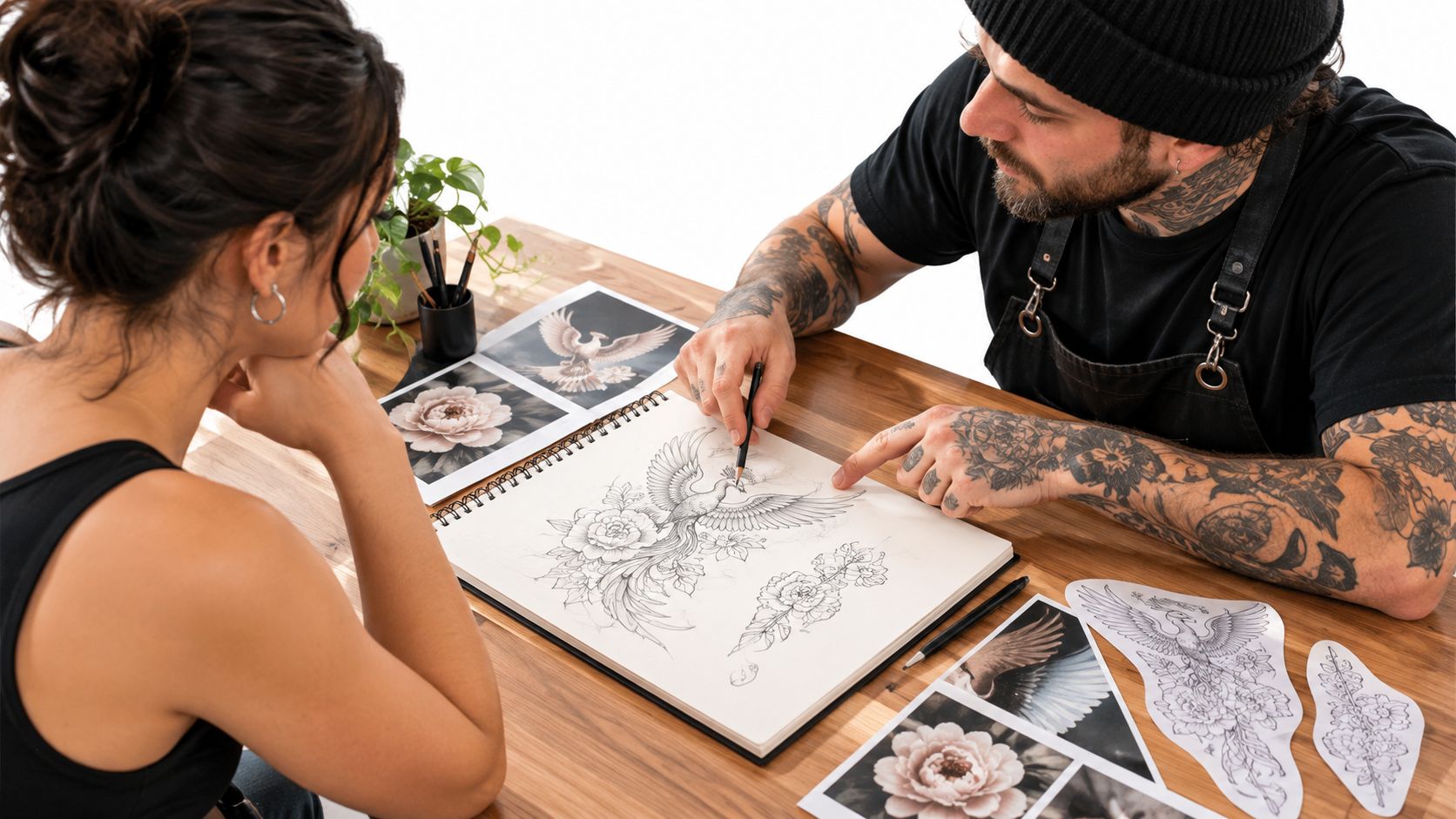
The first custom tattoo appointment usually feels less like buying a product and more like commissioning something that has to sit correctly on your body. One client walks in with a family name they want hidden in script, another wants a floral forearm piece that follows the muscle line, and a third brings three unrelated reference images that need turning into one clean concept. The difference between those jobs isn't just the artwork, it's the planning.
That planning matters because custom ink tattoos are built around your shape, your skin, and your long-term goals, not a template on a wall. A studio that only repeats the same design style over and over can't give you the same result as an artist who adapts line weight, spacing, and placement to the body in front of them. That is why consultations matter so much before the needle ever comes out.
What changes when the piece is truly bespoke
A flash tattoo is chosen, but a custom piece is built. The artist has to think about how much detail the area can hold, how the design will age, and whether the composition still reads clearly when the skin moves. That's why a sleeve concept, a tiny fine-line symbol, and a realism portrait all need different conversations, even if the client starts with the same sentence, “I want something meaningful.”
Practical rule: if the design only works when held up on paper, it probably hasn't been adapted well enough for skin.
The best custom studios also protect originality. If a studio says it won't tattoo the same piece twice, that isn't marketing fluff, it's a sign the artist values ownership, fit, and individuality. For first-timers, that usually means a better result and a clearer sense that the tattoo was made for one person, not pulled from a folder.
What Happens During a Free Tattoo Consultation
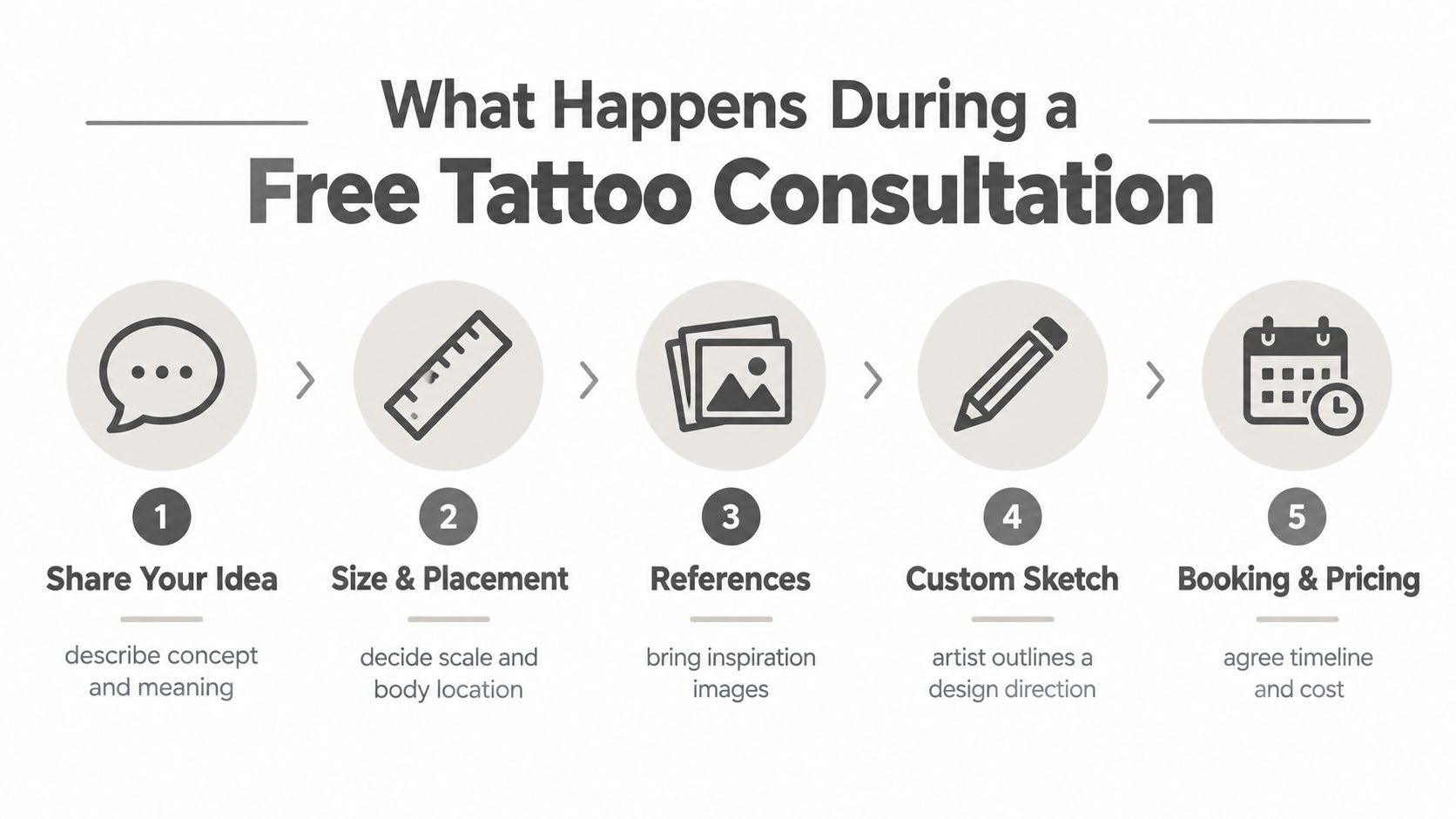
A free consultation should feel structured, not vague. You arrive with an idea, and the artist turns that idea into a workable plan by asking about size, placement, style, and timing. If you come prepared, the meeting moves quickly from “I want something like this” to a real brief the studio can price and schedule.
Bring the right material, not too much material
The most helpful thing you can bring is a small set of references that show mood, shape, or style. A photo of your existing tattoos helps too, because the artist can see what already lives on the skin and what needs to sit beside it. If you've got a rough note on meaning, include that, but don't over-explain it into a paragraph that confuses the visual direction.
Before you book, make sure you can answer these points clearly:
- Concept: what the tattoo should represent, even in plain language.
- Placement: where on the body you want it, and whether the area is flexible.
- Scale: how big you're open to going, because size changes detail.
- Style references: a few images that show the look you want.
- Timeline: whether you need a specific date or can wait for the right slot.
Artists ask these questions for a reason. A forearm piece that reads beautifully in an appointment slot might need more room if you want finer detail, and a design that looks great on a flat reference image may need reshaping around muscle, curve, or movement. That's also why appointment-based bookings make sense for detailed work, because rushing a complex piece is how proportions get compromised.
If you're still comparing ideas, how much a small tattoo can cost is worth checking before the conversation turns into a booking. It gives you a rough sense of how size and complexity shape the plan.
How to use the chat without wasting time
A message can be short and still useful. Send the idea, mention the body area, and attach a couple of clean reference images. If you're asking about a walk-in, say whether the design is simple enough for same-day work, because that helps the studio judge whether your idea fits the day's schedule.
How Custom Designs Are Created and Refined
The design stage is where a strong brief either becomes a clean tattoo or gets diluted by indecision. A good artist doesn't copy references line for line. They pull out the useful parts, shape them into original artwork, and then fit that artwork to the body area you've chosen. That's the part clients rarely see, and it's also where experience matters most.
References are starting points, not finished tattoos
Fine line, black and grey, colour realism, Japanese, dotwork, and old school all demand different design instincts. A floral fine-line piece needs restraint and clarity, while a realism portrait needs structure and tonal control. If you ask for one style and then pile on details that belong to another, the design starts fighting itself.
The refining process usually moves in layers. First comes the rough direction. Then the artist adjusts proportion, spacing, and line density until the composition feels balanced on the body. Only after that does the mockup become something worth booking, because a design that looks polished on screen can still fail on skin if the placement is off.
A good revision isn't a setback, it's the stage where the tattoo becomes yours.
Honest feedback helps here. If the crown needs to be smaller, say it early. If the petals feel too dense, say that before the stencil is final. Artists expect this, and strong studios don't take it personally. They'd rather adjust the composition before the appointment than try to rescue a weak layout on the day.
Placement changes the whole composition too. A design for the upper arm can breathe differently from the same idea on the ribs or wrist. The shape of the area decides where the eye lands first, so the artist has to decide what deserves emphasis and what should stay quieter. That's how a custom piece ends up looking intentional instead of just placed.
How Timebomb Matches Clients to Specialist Artists
The hardest part of booking a tattoo is often not the design itself, it's finding the right person to do it. One artist may be excellent at blackwork and another may excel at realism, but forcing one generalist to handle every style usually weakens the result. Matching the client to the right specialist gives the piece a better chance of ageing well and looking coherent from the start.
Style coverage changes the booking outcome
A studio with resident and guest artists can route you to someone whose portfolio already reflects your brief. If you want fine line, you shouldn't have to guess whether the artist enjoys fine line. If you want something with depth and texture, the portfolio should already show that skill before you sit down for consultation.
That matters for custom ink tattoos because style is not decoration, it's method. A style-specific artist chooses needle grouping, shading rhythm, and line density differently from a generalist, and those choices affect how the tattoo looks once it heals. The more closely the artist works in your target style, the less compromise you usually need in the final design.
Timebomb Tattoo & Piercing is one option for that kind of matching, because it works across a broad mix of tattoo styles and offers consultations before booking. That means the conversation can start with the style you want, not with a generic “we can probably do that.”
Two studios can support different client needs
Studio layout also matters more than people expect. Purpose-designed spaces with private curtained areas help clients feel less exposed, and multiple booths can keep flow smoother when appointments and walk-ins overlap. That's especially useful if you're planning a larger piece and want a calmer, more organised setup than a crowded walk-in-only shop.
The practical upside is simple. When the studio is set up for different specialisms and different appointment types, you get fewer compromises on privacy, pacing, and artist fit.
Healing Realities Most Guides Skip
Tattoo aftercare gets talked about like a checklist, but real life doesn't behave like a checklist. UK public guidance treats tattoo care as wound management, which means the questions that matter most are often the practical ones, like whether you can swim, work out, go in the sun, or keep a dressing on safely while you're trying to live normally. In reality, even a small tattoo can create more disruption than people expect if it lands in the wrong place.
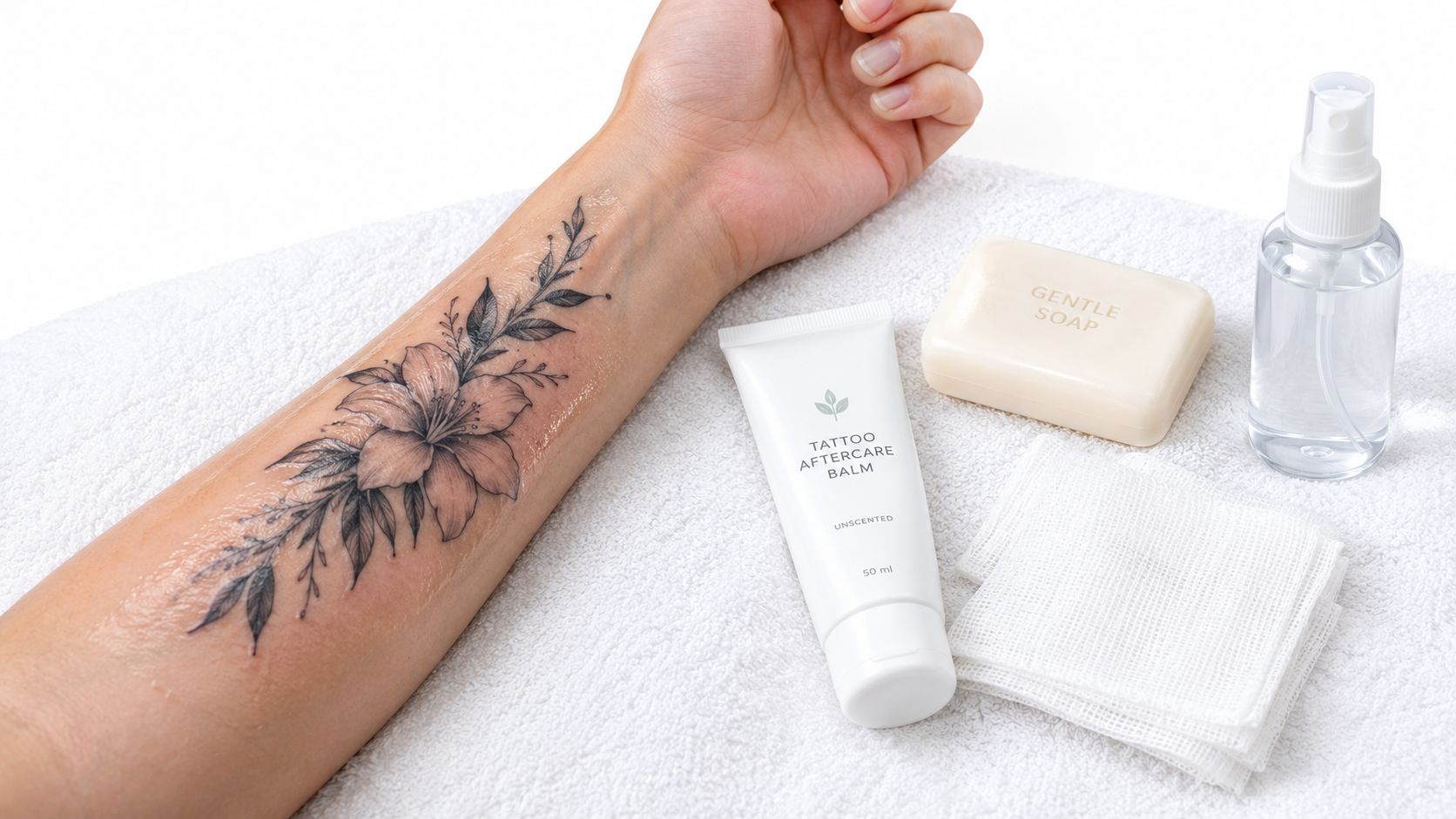
Avoid soaking, pools, saunas, and direct sun while the tattoo heals, and watch for worsening redness, heat, discharge, or swelling, because those are the sorts of signs that should push you to seek medical help. For a more practical breakdown of healing timelines, this aftercare guide on tattoo healing is useful when you're planning time off, workouts, or a holiday around your session.
Small tattoos still need real planning
A tiny design on a high-friction area can be harder to live with than a larger tattoo on a calmer part of the body. Wristbands, ankles, ribs, and other moving areas can make dressing changes and daily movement feel annoying fast. That's why the “it's only small” assumption can be misleading.
The timing of your session matters too. If you have beach plans, gym goals, or a busy work week, the placement choice should reflect that. The design is only one part of the decision. The week after the appointment is part of it as well.
A sensible aftercare routine is boring in the best way. Wash hands before touching the area, don't let other people handle it, and treat the tattoo like skin that's actively recovering. That simple discipline does more for the final result than any fancy aftercare product.
Choosing Between Bournemouth and Croydon Studios
Choosing a studio isn't just about which artist you like, it's also about which location fits your life. Bournemouth is the easier choice if you're based around Dorset or Poole and want a central town setting, while Croydon suits South London clients who want quick access near East Croydon and West Croydon stations. That difference can matter more than people expect when you're booking a consultation and a future tattoo session.
Compare the visit, not just the artwork
Bournemouth works well for clients who prefer a more straightforward local appointment. Croydon is better if you want a London-side studio with strong transport links and a layout built around privacy and workflow. In both cases, the studio setup helps keep the experience controlled rather than chaotic.
Here's the practical decision point. If travel ease is your biggest concern, choose the site that shortens the journey. If privacy and multi-booth workflow matter more, choose the space that fits the way you like to be tattooed. If you're still undecided, a consultation can usually clarify which location suits the scale and style of your piece.
The Bournemouth studio details are available on the Bournemouth studio page, which is useful if you want to check location before booking. Croydon's appeal is simpler, it's built for clients who want a city location with good access and a private studio feel.
Your Next Steps to Book a Custom Tattoo
The smartest way to book is to turn your idea into a short, usable brief. Write down the subject, the body area, your preferred style, and whether you're open on timing. If you already know the size, say that too, because it helps the studio judge whether your idea needs a small appointment or a longer planning conversation.
Bring a couple of reference images, but don't overload the artist with dozens of near-identical screenshots. One or two good examples of shape, mood, or shading usually say more than a messy folder ever will. If you're unsure whether your idea suits a micro piece, a medium custom design, or something more involved, start with a consultation and let the artist steer the scale.
Use the contact route that suits you best. A phone call works if you want a quick answer, email is better for detail, and an online form is the cleanest option if you'd rather send references and wait for a proper reply. Walk-ins can work for simpler ideas when the schedule allows, but anything detailed is usually better handled by appointment.
For first-timers, collectors, and anyone planning both tattoos and piercings, the important part is starting the conversation. There's no penalty for asking a basic question, and the right studio should be able to talk through placement, aftercare, and timing without making the process feel rushed.
Timebomb Tattoo & Piercing offers custom tattooing, professional piercing, free consultations, and artist matching across styles, so your idea can be shaped around the right specialist from the start. If you're planning custom ink tattoos and want a studio that can talk through placement, healing, and booking with you clearly, visit Timebomb Tattoo & Piercing and reach out by phone, email, or the online contact form to book your consultation.