
A tattoo typically shows visible surface healing within 14 to 21 days, while the deeper skin can take up to six months to fully settle. That gap is why a tattoo can look settled before it is finished healing.
The first few days are the part most first-timers misread. The skin is still doing wound recovery work, so the changes you see on the surface are only one piece of the process. If you know which stage you're in, you can choose the right aftercare, avoid panic, and stop treating every itch, flake, or colour shift like a problem.
Table of Contents
- Understanding Tattoo Healing Timelines
- The Healing Stages Day by Day
- What Speeds Up or Slows Down Healing
- Aftercare That Protects Each Stage
- Common Healing Myths Worth Ignoring
- When to Seek Help and How to Book
Understanding Tattoo Healing Timelines
A fresh tattoo heals in layers, and those layers do not finish at the same pace. The visible surface usually closes first, while the deeper tissue keeps settling long after the skin stops looking raw. UK NHS guidance gives a practical benchmark of 14 to 21 days for the visible healing window, with colour often settling by four to six weeks (DGFT NHS aftercare guidance).
Surface healing is the first checkpoint
The first stage is simple wound care. Keep the area clean, protect it from rubbing, and do not keep checking or fiddling with it. A hospital aftercare leaflet advises leaving the dressing on for 24 hours, avoiding baths or swimming until scabs have fallen off, and not touching the area until it is completely healed (FYI Norfolk NHS). That advice matters because the skin is still open enough to react badly to friction, soaking, or dirty hands.
A new tattoo can feel warm, shiny, and a little tight. That does not mean it is failing. It means the outer layer is trying to close, the same way a scraped knee forms a seal before the skin underneath has fully recovered.
Practical rule: if it still feels tender, shiny, or hot enough to bother you, treat it like fresh wound care, not finished skin care.
Deeper settling takes longer than the surface suggests
The outer skin can look calm before the pigment has fully stabilised underneath. Medical tattooing leaflets are useful here because they show that surface healing is only part of the story. Leeds Teaching Hospitals notes that areola tattooing generally heals in 2 to 3 weeks, with colour settling by 4 to 6 weeks (Leeds Teaching Hospitals NHS). That procedure is different from a decorative tattoo, but the wider lesson still helps. The skin may seem settled while the deeper layer is still reorganising.
A longer aftercare guide also notes that some tattoos keep settling underneath the skin for about 4 to 6 months (Vaseline UK tattoo aftercare). That is why sun exposure, soaking, and rough clothing can still affect the result after the flakes are gone.
A simple way to think about the whole process
Split healing into two jobs. The first job is surface closure, which is why the early days focus on cleaning and light protection. The second job is dermal settling, which is why the later weeks call for patience, sun protection, and no picking at skin that is still changing.
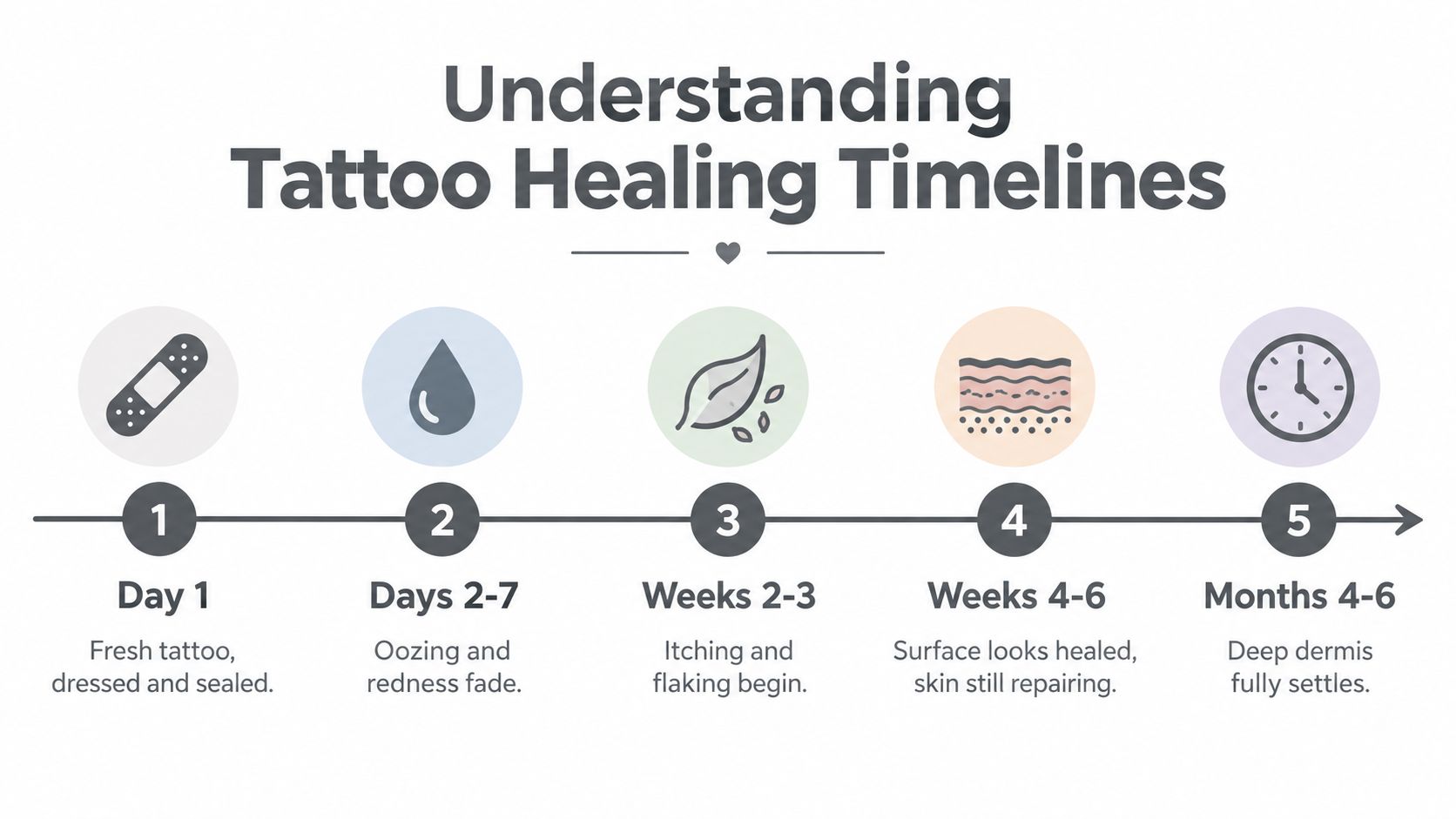
Use the visible timeline for comfort and the deeper timeline for caution. The tattoo may look fine before it is ready for friction, heat, or heavy moisture. That is normal, and it is why good aftercare continues after the peeling stops.
The Healing Stages Day by Day
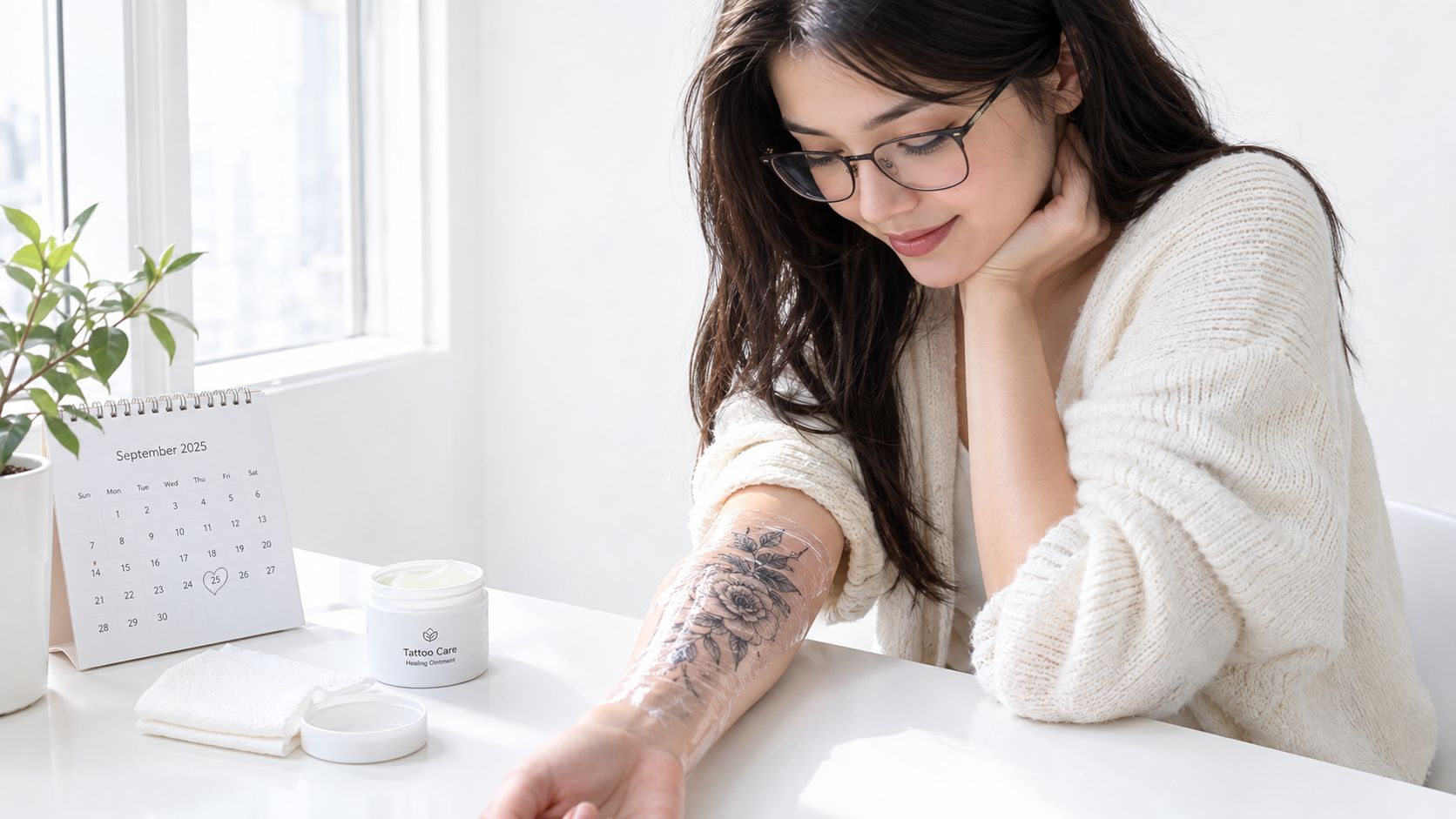
Lena gets her first forearm tattoo on a Friday, then spends the next two weeks checking it in the mirror every few hours. That reaction is normal. Fresh tattoo skin can look fine one minute, then change fast as the top layer closes and the deeper layer keeps settling underneath.
Days one to five can look messy but still be normal
On day one, the tattoo is fresh, warm, and wrapped or dressed. Once the bandage comes off, Lena sees shine, redness, and a little fluid on the skin. That is the surface closing after trauma, so gentle washing and a clean, breathable covering matter most. The skin wants protection, but too much product can trap moisture and slow the process.
By days three to five, the tenderness usually eases, but the surface starts to feel tight and dry. Some tattoos weep a little plasma or look slightly raised while they settle. That can look worrying if you expected the tattoo to stay flat and neat right away. The right move is calm cleaning and light aftercare, not constant touching or overchecking.
A tattoo that feels slightly hot, itchy, or tight in the first week is often behaving normally. Worsening pain, heavy swelling, or skin that gets angrier instead of calmer deserves a second look.
Days six to ten bring flaking and the urge to scratch
This is the stage many first-timers misread. Lena's tattoo starts to flake, then itch in a way that feels irritating rather than painful. The loose skin can look dry and uneven, almost like a thin scabbed layer lifting off a healing scrape. Scratching or peeling away the flakes can pull pigment with them and disturb clean lines.
Keep the area clean, moisturise lightly, and let the dead top layer shed on its own. The surface is changing quickly, but the design underneath is still vulnerable. That is why the skin may look rough for a few days even when the deeper healing is going well.
Days eleven to fourteen look calmer, but the skin is still changing
By the second week, Lena's tattoo looks more settled. The colour comes back through the dry phase, the itch starts easing, and the area feels less dramatic in daily life. Surface healing is closing down, but the skin underneath is still reorganising.
That is the point where people often start treating the tattoo like normal skin again. Sleeves, straps, workouts, and friction can still irritate it if the area feels tender. If the skin still feels delicate, treat it as recovery skin. The outside may look calmer, while the deeper layer is still doing its work.
What Speeds Up or Slows Down Healing
Tattoo healing is shaped by more than aftercare alone. Size, placement, style, and how much the skin moves all change how long the area keeps repairing itself. A large colour piece on a ribcage does not heal like a small black symbol on the outer arm, because the surface area, friction, and scabbing are different.
A helpful way to read the process is to separate surface healing from deeper settling. The top layer can look calm while the skin underneath is still rebuilding, a bit like fresh plaster that has dried on the outside but is not fully set yet. That is why a tattoo can seem fine one day and still react to rubbing, tight clothing, or overhandling the next.
The design and placement shape the timeline
Heavier shading, dense colour, and large fills usually create more trauma than simple linework. That does not mean one style is worse. It means the skin has more to recover from before it feels settled. Placement matters too, because joints, feet, ribs, and other high-movement areas get rubbed, stretched, and bumped more often than flat, stable zones.
| Factor | Faster Healing | Slower Healing |
|---|---|---|
| Placement | Low-friction areas with less movement | Joints, feet, ribs, and other rub-prone spots |
| Design | Small, simple linework | Large, detailed, or heavily shaded work |
| Aftercare | Clean, light moisture, no picking | Overwashing, over-ointment, scratching |
| Clothing | Loose, breathable fabric | Tight fabric that traps sweat and rubs |
| Artist technique | Clean depth and consistent application | Rushed work or uneven saturation |
Your habits matter more than people think
Sleep, hydration, smoking, and general immune health all affect how well the body repairs skin, even if the tattoo itself was done well. A careful artist can place the ink cleanly, but they cannot stop you scraping the area on a doorway, wearing tight clothes over it, or picking at loose skin when it starts to peel.
Pain and recovery also overlap more than first-timers expect. Areas that sting more during the session often stay more noticeable during healing, which is why a guide on how painful getting a tattoo can feel can help you set expectations before you book.
A clean tattoo still depends on the session behind it
A tattoo placed at the right depth usually heals cleaner than one that is overworked. When the needle goes too deep or the artist revisits the skin too aggressively, the area stays angry for longer and scabs can get thicker. That is why a thoughtful session often matters more than people realise, especially on pieces they want to stay crisp over time.
You cannot change your anatomy, but you can control your clothing, your cleaning, your moisturising, and how well you leave the area alone. Those choices usually decide whether the surface calms down smoothly while the deeper skin settles at its own pace.
Aftercare That Protects Each Stage
The right aftercare changes as the tattoo changes. What feels helpful on day one can be too heavy by week two, and what feels harmless later can still irritate skin that is remodelling underneath. Timebomb Tattoo & Piercing provides aftercare guidance alongside its tattoo services, and its studios also offer free consultations when people want to talk through placement, style, and recovery expectations before booking.
Days one to seven need the most restraint
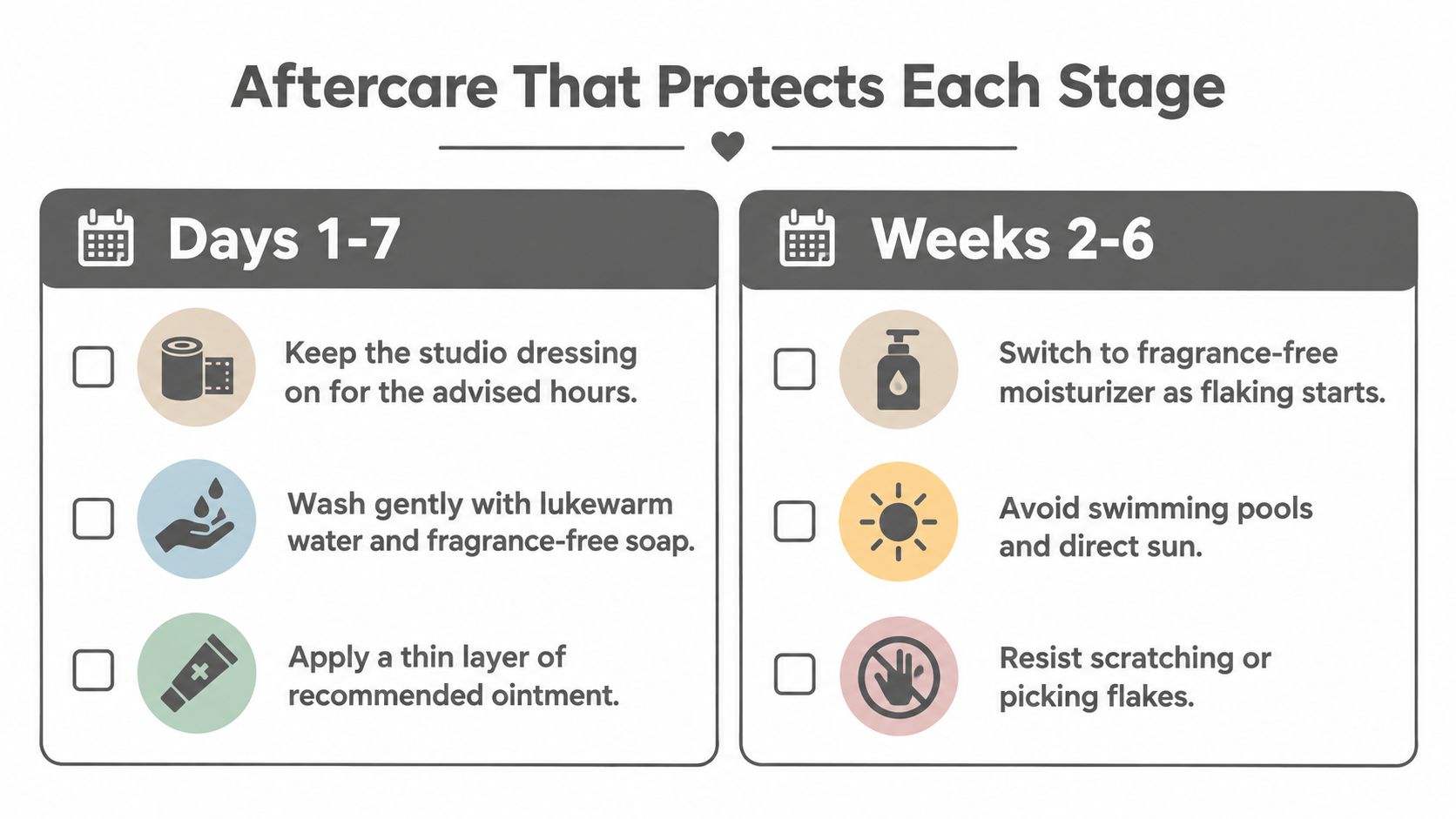
Start with the basics the studio gave you. Keep the dressing on for the recommended window, then wash with lukewarm water and fragrance-free soap, pat the area dry, and apply a thin layer of approved moisturiser. Derby City Council's aftercare guidance also says to keep washing and applying aftercare for at least 10 days, while avoiding soaking, swimming, saunas, steam rooms, tight clothing, and picking scabs (Derby City Council tattoo guidance).
A few things help more than people expect. Loose clothing reduces rubbing on places like ribs and inner biceps, and a clean, light layer of product is enough to stop the skin from cracking. More ointment does not speed healing, it usually just makes the surface soggy.
Weeks two to six are about protection, not fussing
Once flaking starts, switch from heavy ointment to a lighter lotion if your artist recommends it. St George's Hospital says scabs should fall off naturally in 7 to 10 days, and it advises avoiding the gym, sauna, jacuzzi or pool, and sunbathing until the treated area has healed (St George's Hospital leaflet).
When the skin is fully closed, you can begin using SPF 50 on the area, but not before then. Until that point, keep it out of direct sun and skip aggressive exfoliation or retinol on the tattooed skin. The surface may look calm while the colour is still settling underneath, so this is the stage where easy mistakes show up later.
A simple checklist to keep near the mirror
- Wash gently: use lukewarm water and fragrance-free soap, then pat dry.
- Moisturise lightly: apply a thin layer, not a thick coat.
- Leave flakes alone: let dead skin fall off naturally.
- Avoid soaking: no pools, hot tubs, baths, or long water exposure until fully healed.
- Keep friction down: choose loose clothing over tight seams.
- Shield from sun: once closed, use SPF 50 daily for at least three months, since fresh pigment fades fastest in strong summer light.
If you are planning a tattoo or piercing in the UK and want a studio option with appointment-based work, walk-ins when available, and consultations before booking, Timebomb Tattoo & Piercing is one place to start your search.
Common Healing Myths Worth Ignoring
A lot of bad advice comes from judging a tattoo by the part you can see. The surface may look calm while the skin underneath is still settling, and that is where people start making bad calls. A tattoo is not healed just because it no longer looks wet.
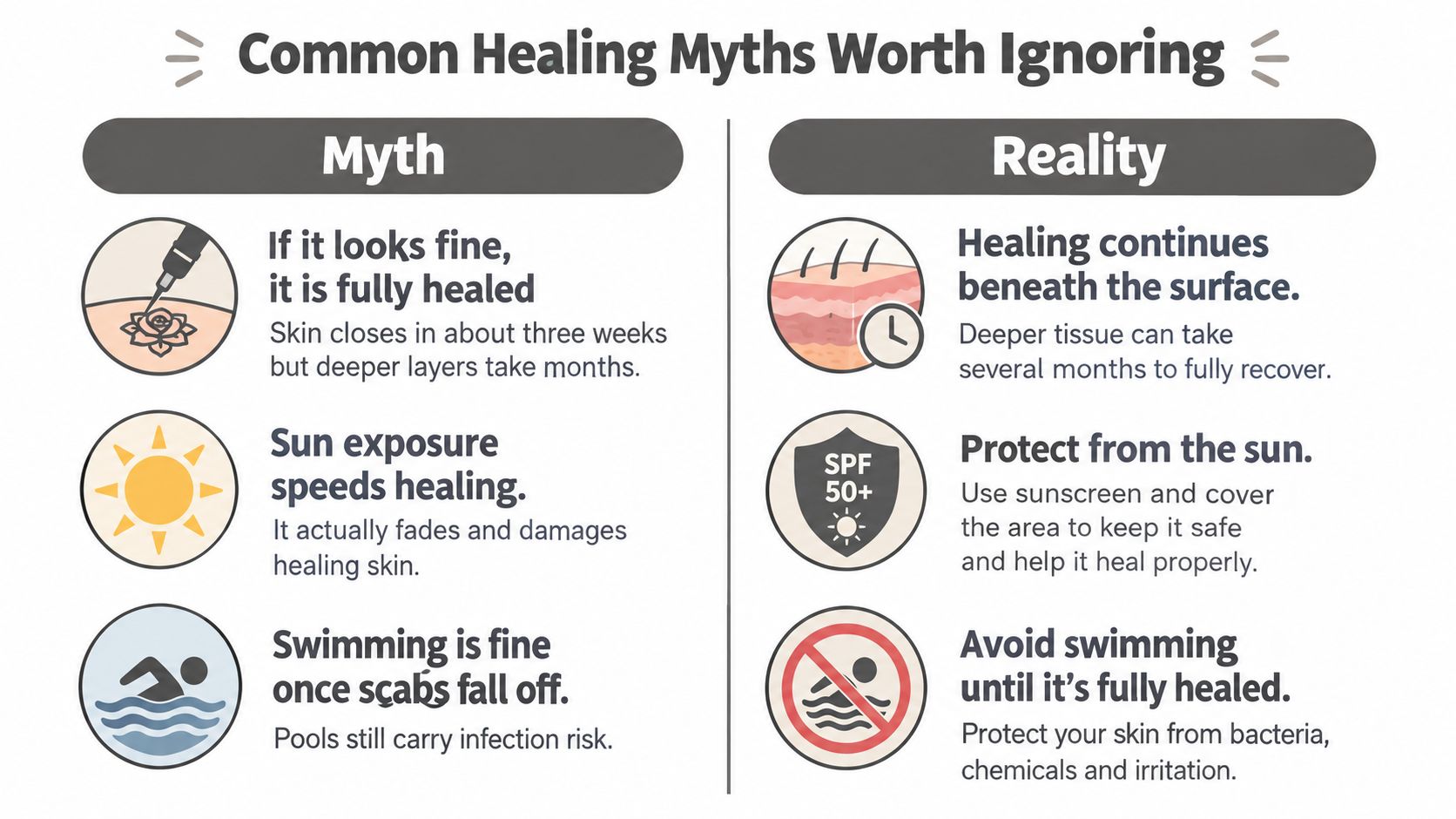
The myth that peeling means finished healing
The myth is simple. Once the peeling stops, the tattoo is healed. The truth is slower. The outer layer can close while the deeper dermis is still settling for weeks or months, so a piece that looks finished can still react badly to knocks, sun, or over-scrubbing.
That is why artists keep aftercare conservative well beyond the first peel cycle.
Small tattoos do not automatically heal faster either. A tiny finger tattoo can be harder to manage because fingers move, get washed often, and take constant contact, while a larger tattoo on a steadier area can behave more predictably. Size is only part of the story. Body mechanics matter more.
More ointment is not better
Another common mistake is smothering the tattoo. Heavy over-application can trap moisture, leave the skin soggy, and make cleaning harder. The skin needs a thin, even layer, not a glossy coat.
Peeling is not a failure sign. Mild flaking is normal shedding from the epidermis, and picking at it can pull colour with it. If you see a scab lifting and want to help it along, leave it alone. The skin knows what to release and when.
Sun and water still matter after the first peel
Sun exposure does not speed healing. It works against it. Fresh pigment can fade under UV, and skin that still feels tender can get irritated quickly, so sun protection belongs in the recovery plan, not after it.
Swimming follows the same rule. Scabs falling off do not mean the skin is ready for pools, hot tubs, or long soaks. If you are still in the stage where the skin feels fragile, keep water exposure short and controlled.
A quick self-check helps. Are you treating the tattoo like fragile skin, using only a thin layer of product, and leaving flakes and scabs alone? If not, the advice you have seen online is probably less useful than the instructions your artist gave you.
When to Seek Help and How to Book
A tattoo that is healing well usually moves through a familiar pattern. The skin feels red and tight, then starts to flake, then settles as the surface closes and the deeper layer calms down. If your tattoo is drifting away from that pattern, take clear photos in good light and note the date. That gives your artist or a clinician a better way to judge what is happening without guessing from memory.
Call the artist first for unusual but local changes
If swelling keeps building after the first few days, if ink or plasma seems trapped under the skin, if raised lines stay stubborn, or if colour looks patchy in a way that does not match normal peeling, contact the original artist. These signs do not automatically mean infection. They do mean the tattoo needs a proper look from the person who placed it.
A local studio search can help if you need to compare styles or find a new appointment. The Bournemouth tattoo listings at tattoos in Bournemouth are useful for checking options before you book again.
Get medical help if infection seems possible
Spreading redness, heat that moves beyond the tattoo, pus, fever, or tender lymph nodes need a GP or urgent care review. Those are not part of normal healing, and more ointment will not fix them. If the skin is getting hotter, redder, and more painful instead of calmer, stop trying to manage it at home.
There is a simple rule here. Surface irritation can look annoying. Infection looks like a worsening problem.
Book the next session with the heal in mind
When you are ready to book again, look for a studio that shows healed work in its portfolio, answers placement and aftercare questions clearly, and gives realistic timing for touch-ups. A consultation should cover the design, the placement, the clothing or activity issues you have, and whether the piece needs a follow-up slot about four to six weeks later, once the skin has had time to settle.
If you want a studio that handles custom tattooing, body piercing, and aftercare guidance in one place, Timebomb Tattoo & Piercing works from Bournemouth and Croydon with appointment-based bookings and consultations before larger or more detailed pieces. The healing talk should feel as normal as the design talk, because the skin starts recovering as soon as the needle stops.