
A 2020 peer-reviewed survey found that tattoo pain averaged 4.35 out of 10 during the session and 2.07 out of 10 immediately afterwards. For most first-timers, that means the pain is usually moderate, not extreme, and it tends to ease once the needle stops.
You're probably sitting there thinking about the chair, the buzz, and whether you've underestimated what you've booked. That reaction is normal. Pain is part of tattooing, but the question is usually not “Will it hurt at all?”, it's “Can I handle it for long enough to get the piece I want?”
A useful way to think about it is that tattoo pain has a rhythm. The first few minutes often feel sharper in your head than in your skin, then your body settles, then irritation builds if the sitting runs long or the placement is awkward. That's why a good pain guide needs to talk about the whole appointment, not just the first needle touch.
Table of Contents
- What to Expect When You First Sit in the Chair
- The Science Behind Tattoo Pain
- How Body Placement Shapes Your Pain Experience
- Session Length and Size Considerations
- Practical Tips to Manage Discomfort
- Aftercare and the Recovery Process
- Common Questions About Tattoo Pain
- Book Your Free Consultation Today
What to Expect When You First Sit in the Chair
The first few minutes usually feel harder in your head than they do on your skin. You sit down, hear the machine start, and your body gets a moment to catch up with what your mind already expects. That early spike is common, and tattoo pain is usually manageable for most placements.
A measured baseline comes from a 2020 peer-reviewed survey of 1,092 tattooed people. They rated pain at 4.35 out of 10 during the session and 2.07 out of 10 immediately afterwards, which suggests the experience is more often uncomfortable than overwhelming measured tattoo pain survey. The same study found that pain increased with longer tattooing time, more bleeding, and higher stress.
That is the part first-timers often miss. Pain is not a single wave that rises at the same speed for everyone. It usually has a pattern, sharp at the start, easier once your body settles, then more irritating if the appointment runs long or the area is already getting tender.
If you are booking in Bournemouth, a local consultation such as Bournemouth tattoo appointments gives you a chance to talk through size, placement, and how long the session is likely to last before any needle touches your skin.
Practical rule: if you are anxious, choose a shorter first session and a placement with a bit more natural cushioning.
A lot of first-timers also worry they will look dramatic if they need a pause. You will not. A good artist would rather stop for a minute than push someone into panic, because tension makes the whole sitting feel harder than it needs to be.
The Science Behind Tattoo Pain
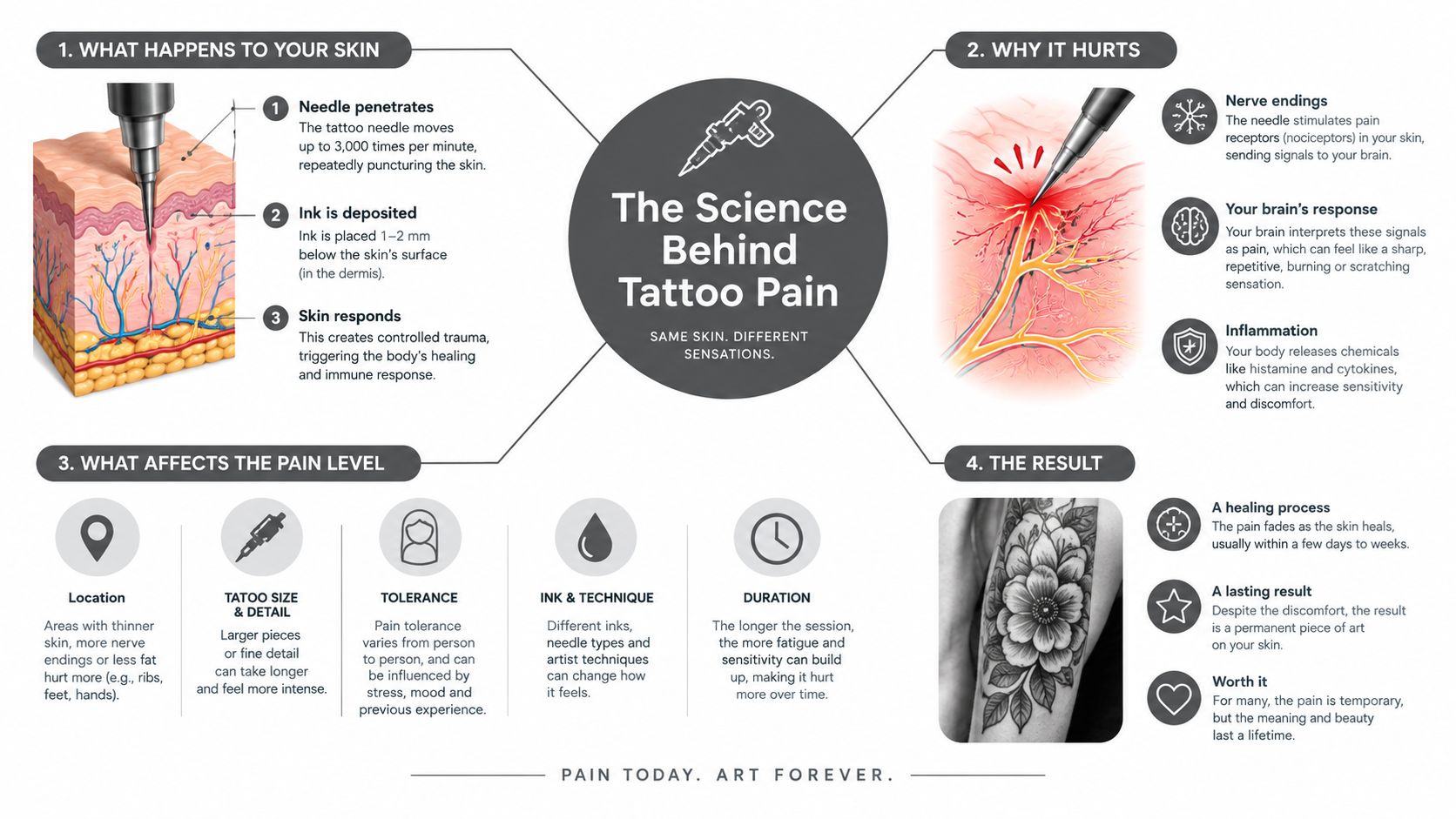
A tattoo starts to hurt the moment the needle reaches the dermis. The tip passes through the outer layer of skin, then the nerve endings in the dermis detect tissue damage and send pain signals to the brain dermal nociceptor study. That is why the feeling can come across as sharp, scratchy, hot, or stinging, depending on where you sit and how fast the artist is working.
The more useful question is how that pain changes during the session. At the start, the skin is fresh and your body is still reacting to the first passes. As the needle keeps working the same area, the skin gets more irritated, and the sensation often feels louder, warmer, or more abrasive. The same clinical study found that pain increased with session duration, bleeding, and stress, while pain during the procedure was not significantly different between men and women. Women reported higher pain immediately after completion.
The reason first-timers get caught off guard is simple. Tattooing is not one clean sting. It is a series of small hits in the same patch of skin, and your brain keeps updating the message as that spot gets tired. A fresh line may feel manageable, then the same motion can start to feel more raw once the area is worked over a few times.
That is why two clients can describe the same appointment in very different ways. One may notice steady scratching from start to finish. Another feels the last part of the session more strongly than the beginning, when the skin has already had enough. Anxiety can make that shift feel harsher, too, because tense muscles and a braced mind make every stroke seem more important than it is.
How Body Placement Shapes Your Pain Experience
Placement is the part many understand in theory and underestimate in practice. A small design on a padded area can feel straightforward, while a tiny tattoo over bone can make the same machine work feel far sharper placement pain guide. That's because skin thickness, soft tissue, and bone proximity all change how much buffering the needle has.
Here's the simple comparison. Ribs, feet, ankles, neck, hands, and inner forearms are commonly described as less comfortable because they tend to have thinner skin or less cushioning. Fleshier areas, like the thigh, usually feel easier to tolerate because there's more muscle or fat under the needle UK body placement guidance. The point isn't that one zone is impossible, it's that the same design can feel very different depending on where you put it.
| Placement | Typical Pain Level | Reason |
|---|---|---|
| Ribs | Higher | Thin skin, little cushioning, close to bone |
| Feet | Higher | Dense sensitivity, less soft tissue |
| Ankles | Higher | Bone is close to the surface |
| Neck | Higher | Thin skin and awkward angles |
| Hands | Higher | Bony structure and exposed skin |
| Inner forearms | Higher | Sensitive skin and repeated movement |
| Outer upper arm | Lower | More padding, easier to tolerate |
| Thigh | Lower | More muscle or fat, less sharpness |
| Calf | Lower | Better cushioning than bony zones |
That table doesn't mean every person will react the same way. It does mean you shouldn't choose a placement only because it looks good in a photo. A fine-line piece on the outer arm is often easier to sit through than a detailed realism design over ribs or spine, even if the arm tattoo is larger.
If you're torn between two ideas, choose the placement that matches the session you can realistically finish in good shape. That's the practical move, not the brave one.
Session Length and Size Considerations
Size changes pain because time changes pain. A tattoo that runs for a few hours gives the skin more time to become irritated, and once that happens, the same linework feels less like a fresh sensation and more like an ongoing scrape session-length guidance. The first hour is usually easier than later stages because the skin hasn't been worked over as much yet.
What longer sittings really feel like
A short appointment often feels mentally bigger than it is. You're still adjusting, still listening to the machine, still learning how your body reacts. After a while, the rhythm becomes familiar, but the skin can start to feel warm, tender, or slightly raw, and that's when concentration gets harder.
For larger custom work, splitting the design across multiple shorter sittings is often the more sensible choice. It gives the artist better control, and it gives your skin time to recover between passes. If you're comparing options, a simple small tattoo estimate can be a useful starting point, which is why some clients check small tattoo pricing guidance before they commit to a bigger idea.
Useful rule of thumb: if the design needs hours of work, ask how it can be broken into parts without changing the overall result.
The mistake people make is assuming endurance is the same as quality. It isn't. Sitting longer than you can focus comfortably can make you tense, and tension makes pain feel louder. It can also lead to restless movement, which isn't ideal for clean linework or shading.
Think of design size, detail, and session length as one decision, not three separate ones. A simpler composition in a friendlier placement often gives you a better first experience than a technically ambitious piece you can't comfortably sit through.
Practical Tips to Manage Discomfort
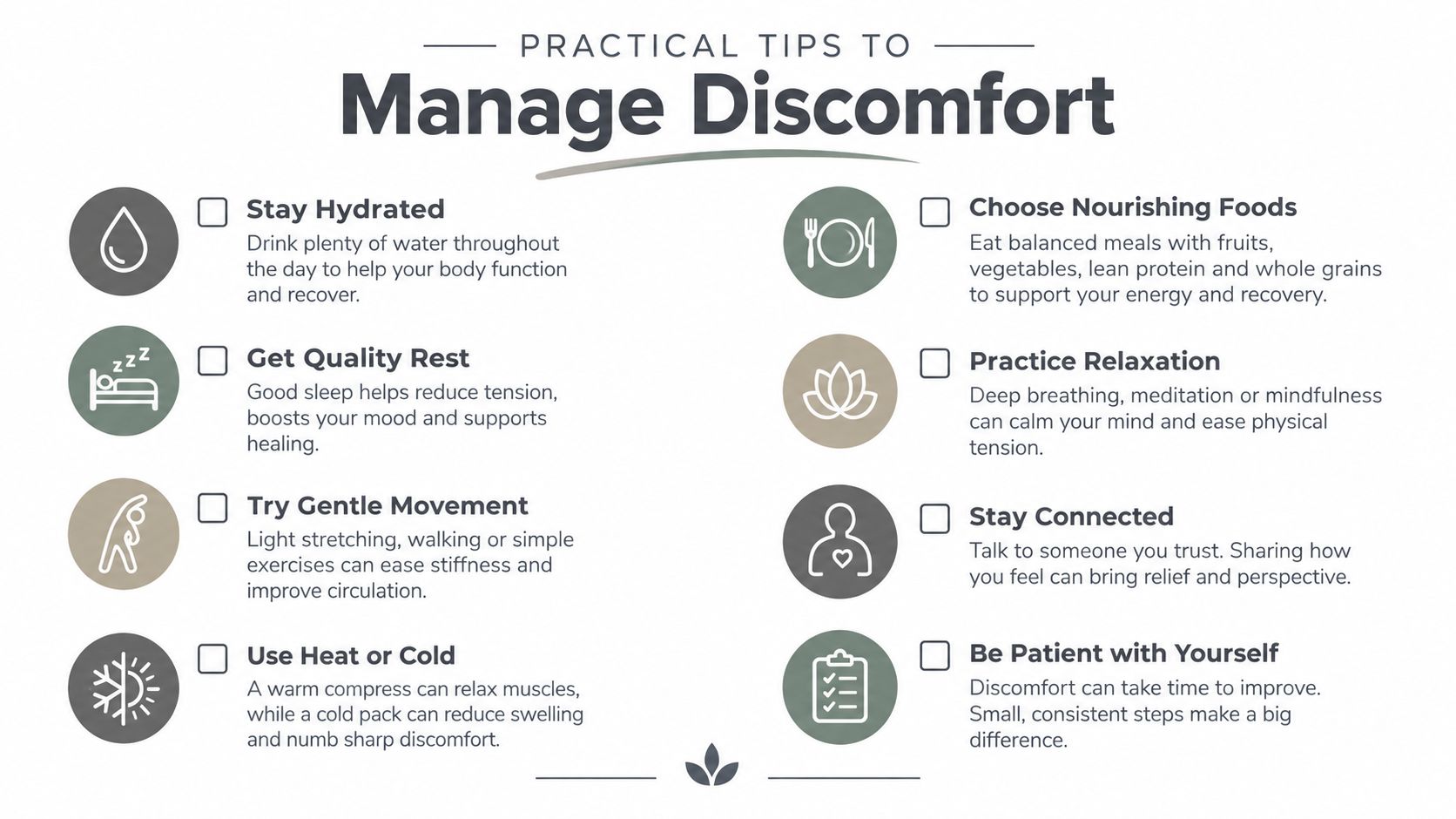
Preparation changes the whole appointment more than people expect. If you show up tired, hungry, or dehydrated, your body has less to work with, and the needle feels more intense than it needs to. A calm sit starts before you enter the studio, not when the machine switches on.
Before you book
Eat properly, drink water, and get decent sleep the night before. Those basics sound boring, but they're the difference between feeling settled and feeling wrung out. Avoid turning up drunk, because that makes coordination worse and can turn a manageable appointment into a messy one.
During the session
Talk to your artist before you're struggling. A quick “Can I take a minute?” is far better than sitting stiff and trying to power through a wave of panic. Short breaks, slow breathing, and unclenching your shoulders all help more than people think because they stop your body from treating the whole appointment like a threat.
Good studio habit: say early if the pain spikes, especially on bony areas or during shading, because artists can usually adjust pace or angle.
What helps most is consistency. Wear clothes that give easy access to the area, bring something to keep you grounded if your artist allows it, and keep your head in the room rather than in the what-ifs. If you're considering a first appointment, a free consultation at Timebomb Tattoo & Piercing can also be useful for face-to-face questions about size, placement, and what the sitting will feel like.
What not to do
Don't skip breakfast and call it bravery. Don't assume a numbing product will solve every problem without checking how your artist works. Don't keep quiet if you're struggling, because a short pause is better than spiralling into a bad experience.
The goal isn't to pretend tattooing doesn't hurt. It's to lower the noise around the pain so your body can cope with it properly.
Aftercare and the Recovery Process
The discomfort doesn't stop the moment the machine does. Fresh tattoos can stay tender, and the way you treat the skin after the appointment affects how long that soreness hangs around. Good aftercare also protects the artwork, which is part of the comfort equation because irritated, poorly healed skin tends to stay unhappy for longer.

The early stage usually brings tenderness and redness, then the skin starts to dry, peel, and itch as it heals. That itchy phase is where people get careless, because the tattoo starts looking less dramatic and more normal, so they assume the work is finished. It isn't. The surface may look settled before the deeper layers are fully comfortable.
What healing should feel like
Normal recovery usually feels like mild soreness, tightness, and itchiness that gradually settles with time. If the area becomes increasingly hot, excessively swollen, or far more painful instead of less, that's the point to speak to your artist or seek medical advice. Clear instructions matter here because proper aftercare reduces avoidable irritation and helps protect the final result.
For a studio with a broad custom focus, aftercare is part of the job, not an extra. That's one reason some clients prefer a place like Body Art Tattoo information when they want guided support from the start of the process through healing.
Keep the skin clean, follow the wash and moisturise routine you were given, and don't pick at flakes or scabs.
Aftercare is also where many first-timers realise the emotional side of tattooing matters. You've sat through the appointment, so now you want proof that the effort was worth it. Healing well gives you that payoff sooner, with less unnecessary discomfort along the way.
Common Questions About Tattoo Pain
Do numbing creams solve the problem?
Sometimes they help, but they're not a magic fix. They can also change skin texture and how the artist works, so you should always ask before using one.
Does pain tolerance predict who will cope well?
Not reliably. Two people can have the same idea of themselves as “bad with pain” and still react very differently in the chair.
What if the pain becomes too much halfway through?
Say so immediately. A short break, a drink of water, or a change in pace can make the difference between finishing well and pushing past a sensible limit.
Are bigger tattoos always more painful than smaller ones?
Not always. A small piece in a sensitive place can feel harsher than a larger tattoo on a cushioned area, and session length often matters as much as design size.
The most common mistake is treating discomfort like a test of character. It's not. It's a signal from your body, and a good artist will work with it rather than against it.
Book Your Free Consultation Today
Timebomb Tattoo & Piercing offers free consultations, custom tattooing, and body piercing from two professional studios in Bournemouth and Croydon. If you're nervous about how painful getting a tattoo will be, that conversation is the right place to talk through placement, size, session length, and what to expect in the chair.
You can reach the team by phone, email, or online form, and walk-ins are available when artists have space. The studios are at 109 Old Christchurch Road, Bournemouth, BH1 1EP and 22 George Street, Croydon, CR0 1PA, with bespoke work supported by experienced artists and personalised aftercare guidance.
If you're weighing up your first tattoo, Timebomb Tattoo & Piercing can help you plan the piece around your pain tolerance, placement, and schedule. Visit Timebomb Tattoo & Piercing to book a free consultation, ask about walk-in availability, or speak to the team about a custom design that fits the session you can comfortably sit through.