
You've just left the studio with a new tattoo, and your plans are already getting in the way. Perhaps you've booked a swimming session, a beach holiday is coming up, or you just want to relax in the bath tonight. The short answer is clear: don't swim with a fresh tattoo. A little patience now protects both your skin and the finished artwork.
A new tattoo needs to be treated as a healing skin wound, not as ordinary, intact skin. The safest time to return to swimming depends on how the area looks and feels, not only on the number of days since your appointment.
Table of Contents
- The Honest Answer About Swimming With A New Tattoo
- Understanding Tattoo Healing And Water Risks
- Pool Sea And Hot Tub Risks Compared
- Essential Aftercare During The Healing Period
- When Is It Finally Safe To Swim Again
- Professional Guidance And Booking Information
The Honest Answer About Swimming With A New Tattoo
You might look at your new tattoo and see clean lines, bright colour, and a finished design. Underneath that appearance, however, your skin is still repairing itself. The tattooed area has been worked repeatedly by needles, so its protective surface needs time to close and settle.
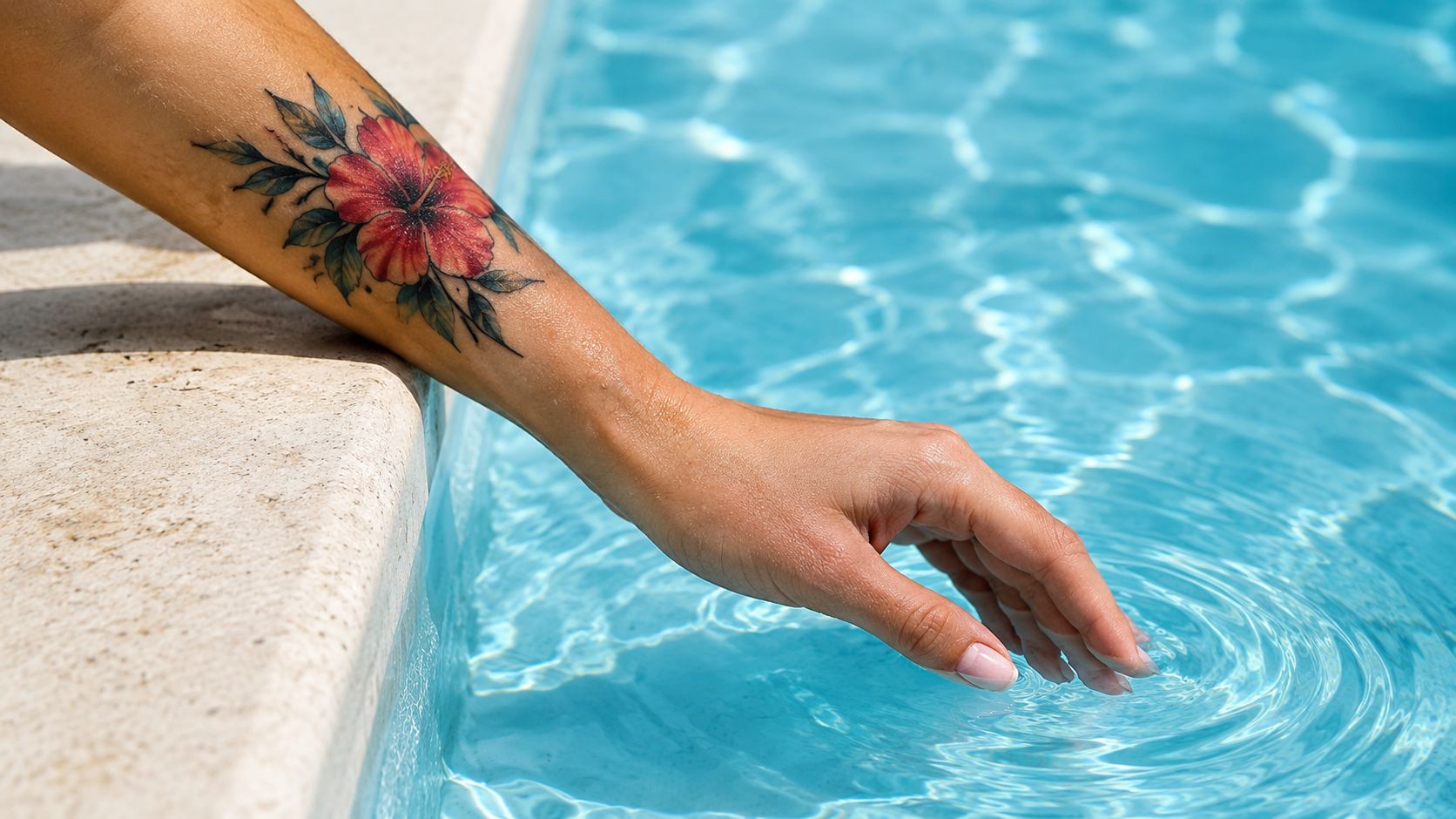
Swimming creates several problems at once. Prolonged immersion softens scabs and peeling skin, while friction from clothing, towels, or movement can disturb the surface. Pool chemicals, salt water, and microorganisms in natural water can also irritate incompletely healed skin or enter through areas that haven't fully closed.
UK local-authority tattooing guidance from Derby advises avoiding swimming, soaking, prolonged showers, excess sweating, and contact sports until the tattoo has healed. It also recommends washing gently with mild, unperfumed soap and patting the area dry rather than rubbing it.
The practical rule: If the tattoo is still wet, peeling, scabbed, open, or actively tender, it isn't ready for swimming.
A short accidental splash isn't automatically a disaster. The sensible response is to leave the water, rinse gently with clean water if needed, pat the tattoo dry, and continue the aftercare recommended by your artist. What you shouldn't do is panic, scrub the area, pick at softened scabs, or try to sterilise it with harsh products.
Understanding Tattoo Healing And Water Risks
Tattoo healing is a gradual repair process. The skin forms a temporary protective barrier over the treated area, and the visible stages can include tenderness, redness, peeling, and scabbing. Those changes are signs that the surface is still settling, so they matter more than a calendar date.
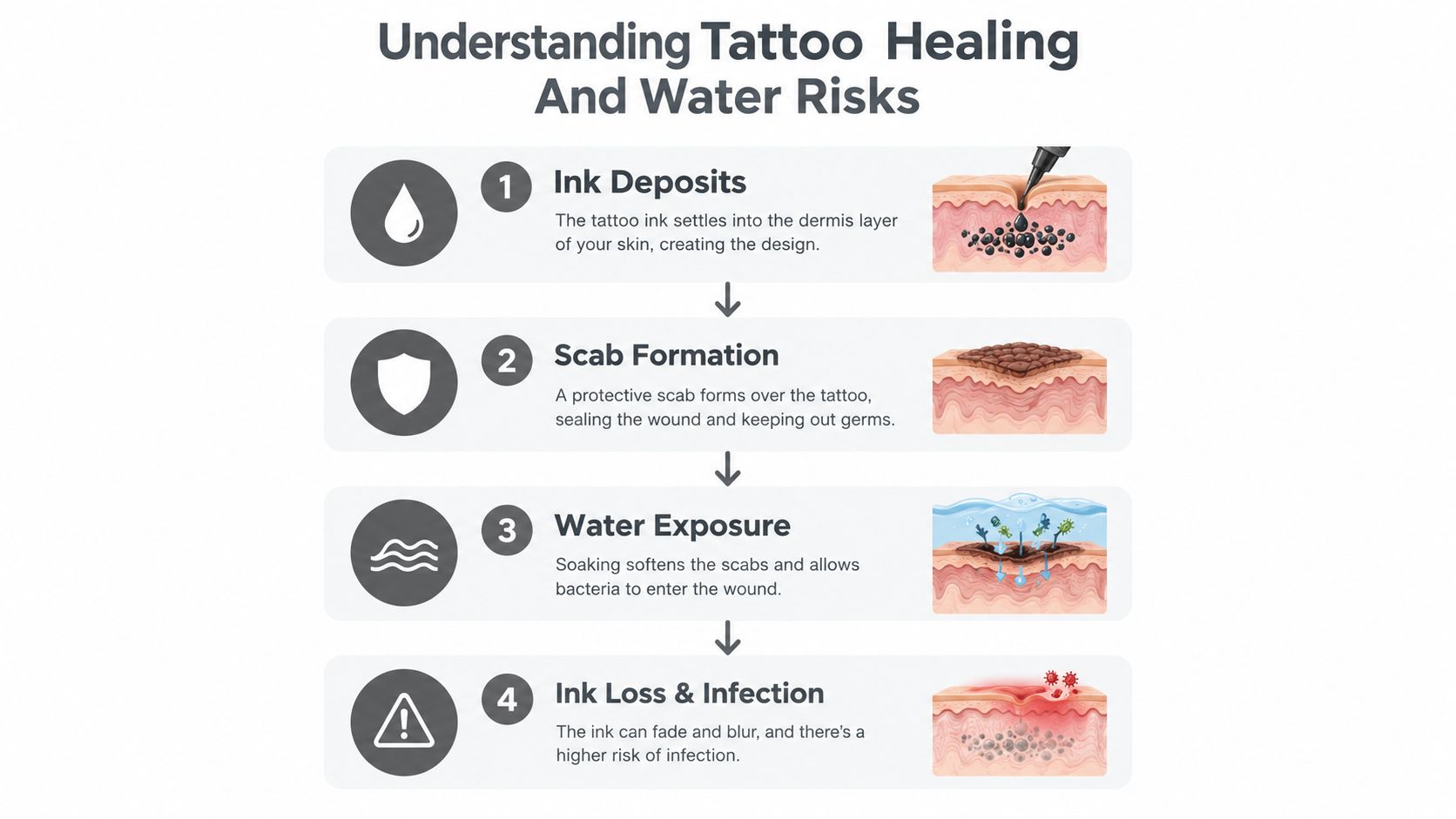
The main concern isn't ordinary, brief washing. It's long exposure to water, particularly when the tattoo is submerged. Water can soften scabs before the skin underneath is ready, and friction can remove them prematurely. Because pigment retention depends on the skin healing properly, disturbing that surface can contribute to uneven results.
Why soaking is different from showering
A brief, gentle shower lets you clean the area without keeping it underwater. A swim, bath, hot tub session, or time in the sea surrounds the tattoo with water for much longer. That prolonged moisture can weaken the developing barrier, while chemicals, salt, microorganisms, and rubbing add separate sources of irritation.
The guide to tattoo healing time can help you understand why healing varies. Tattoo size, placement, technique, and your individual skin response all influence how quickly the surface settles, so two tattoos completed on the same day may not be ready for water at the same time.
The sequence is easier to remember when you think of the tattoo as a protected repair site:
- The skin is treated: Needling leaves the surface vulnerable while pigment settles.
- A protective layer develops: Scabs and peeling skin help shield the area as it repairs.
- Water disrupts that layer: Soaking softens the surface and makes friction more damaging.
- The result can suffer: Disturbed healing may affect pigment retention and increase contamination risk.
The embedded healing visual offers another way to think about the process before you decide whether your tattoo is ready for the water.
Pool Sea And Hot Tub Risks Compared
Not all water presents the same exposure, but none of these options is suitable while a tattoo is still healing. The safest comparison is to consider what the water adds to the basic problem of prolonged immersion.
Chlorinated pools
Chlorine can irritate damaged epidermis and may affect pigment while the skin is re-forming its surface. A pool may look clean, but it still exposes a healing tattoo to shared water and repeated contact. NHS aftercare guidance says to avoid chlorinated pools until scabs have fallen off.
That advice also applies to saltwater pools. The water may feel different from the sea, but it is still an environment where the tattoo remains immersed and exposed to substances that can irritate unsettled skin.
The sea and other natural water
The sea combines immersion with salt, movement, and possible contact with sand or other contaminants. Natural swimming water should also be avoided until the tattoo is fully healed. A quick rinse after leaving the sea doesn't make it safe to enter beforehand, because the exposure has already happened.
Hot tubs, spas, and jacuzzis
Warm, enclosed water is especially unsuitable for a fresh tattoo. NHS aftercare information advises avoiding chlorinated or salt water, saunas, and jacuzzis during healing, and recommends waiting until the area is fully healed before swimming or using hot tubs. For the medical-tattooing procedure described by one NHS Foundation Trust, swimming and hot tubs commonly wait around 7–10 days, but an ordinary decorative tattoo may take longer. Read the NHS medical-tattooing aftercare advice alongside your artist's specific instructions.
| Water environment | Main concern | Safe decision |
|---|---|---|
| Chlorinated pool | Chemical irritation, immersion, and contamination | Wait until the tattoo is fully healed and scabs have gone |
| Sea or salt water | Salt, prolonged moisture, sand, and natural contaminants | Wait until the surface is fully closed and settled |
| Hot tub or jacuzzi | Immersion, heat, chemicals, and contamination | Wait until fully healed, not merely until it feels less sore |
Don't cover a fresh tattoo with petroleum jelly or an improvised waterproof dressing so you can swim. Occlusion can trap moisture and bacteria. Follow the dressing instructions from your artist instead, and seek UK medical advice promptly if you notice spreading redness, heat, increasing pain, swelling, or pus.
Essential Aftercare During The Healing Period
Good aftercare keeps the decision simple. Your job is to support the skin's natural repair process and avoid anything that softens, rubs, contaminates, or overheats the area.
Clean gently
Wash your hands before touching the tattoo. Follow your artist's instructions about when to remove the initial dressing, then clean the area with mild, unperfumed soap and clean water. Use a gentle touch, rinse thoroughly, and pat dry, rather than rubbing with a towel.
A shower is preferable to a bath because it limits soaking. Keep the water comfortable rather than excessively hot, and don't direct a forceful spray at the tattoo. You can find practical advice about when to take cling film off a tattoo if your artist has used that type of covering.
Keep products simple
Apply only the aftercare product recommended by your tattoo artist, and use a light layer if instructed. Avoid experimenting with thick occlusive products, fragranced creams, antiseptics, or household remedies. More product doesn't mean faster healing, and a heavy layer can leave the surface overly moist.
Reduce rubbing and contamination
Choose clean, loose clothing that won't press against the tattoo. Keep bedding and towels clean, and avoid picking scabs or peeling skin even when the area becomes itchy. Scratching can remove skin before it is ready and may irritate the surface further.
Pause activities that create moisture and friction
UK guidance groups swimming with soaking, excess sweating, and contact sports during healing. That means you should plan around activities that leave the tattoo wet, repeatedly rubbed, or exposed to dirty shared surfaces. If you're travelling or training soon after an appointment, ask your artist how the tattoo's placement affects protection.
A clean, dry, undisturbed tattoo has the best chance to settle evenly.
Follow the later of two dates: the point recommended by your artist, or the point at which the tattoo has clearly finished healing. A stated minimum isn't permission to swim if the skin still looks raw, shiny, scabbed, or inflamed.
When Is It Finally Safe To Swim Again
A calendar can provide a useful minimum, but your skin provides the final answer. NHS guidance includes examples ranging from keeping a treated area dry for seven days to avoiding swimming for at least two weeks after micropigmentation. Other guidance says to wait until the area is fully healed. These differences exist because procedures and healing responses vary.
The University Hospital Southampton micropigmentation guidance recommends avoiding swimming for at least two weeks and notes that chlorine can cause fading or changes to tattoo pigment. Leeds Teaching Hospitals advises keeping the treated area dry for seven days and avoiding swimming, saunas, and hot tubs during that period. For an ordinary tattoo, choose the later date if any sign of active healing remains.
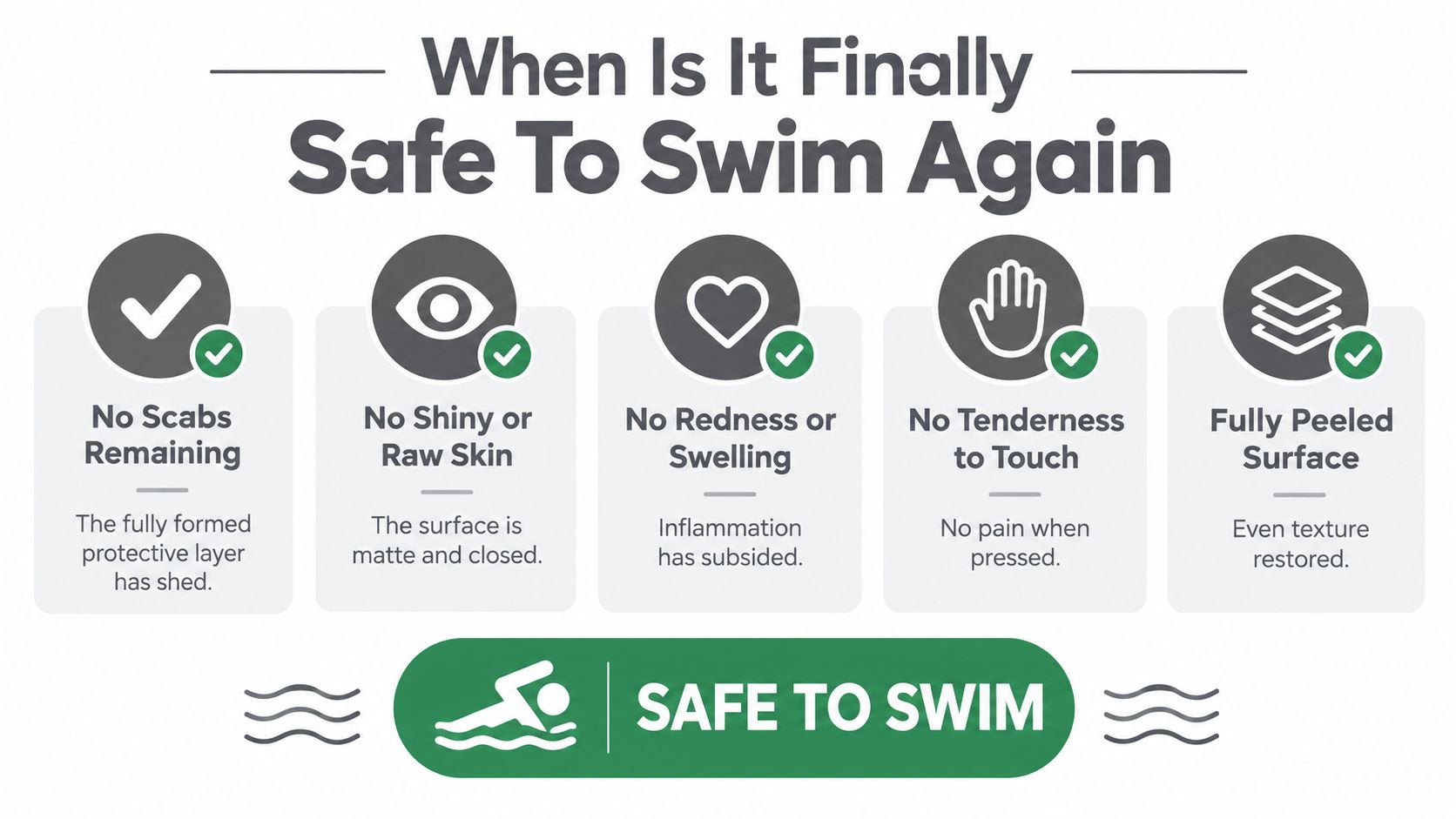
Use this decision check before getting in:
- No scabs remain: The protective scabbing stage has finished.
- The skin isn't shiny or raw: The surface looks closed rather than freshly treated.
- There is no redness or swelling: Inflammation has settled instead of spreading.
- The area isn't tender to touch: Normal contact no longer causes pain.
- The surface has fully peeled: The texture looks even and no active flaking remains.
If you answer no to any point, postpone swimming and continue your artist's aftercare. When you do return, keep the first swim sensible, rinse away pool or salt water afterwards, cleanse gently, and pat dry.
A different question is whether the tattoo may be infected. The UK government explains that tattooing carries infection risks, including bloodborne-virus transmission. NHS advice identifies worsening redness, swelling, heat, pain, discharge, and fever as reasons to seek medical assessment. Contact your GP or NHS 111 for advice, and use urgent services when symptoms are severe or rapidly worsening.
Professional Guidance And Booking Information
Your artist should give you aftercare advice that reflects the tattoo's size, placement, technique, dressing, and your planned activities. Ask before booking if you have a swimming event, holiday, physically demanding job, or training schedule that could affect the first part of healing. A consultation can help you choose timing and placement more sensibly.
A professional studio should also explain how to look after the tattoo and when to ask for help. If you're considering a tattoo or piercing in Bournemouth, the Bournemouth tattoo studio offers consultations, custom tattooing, and professional piercing. The wider service includes artists working across styles such as Traditional, Fine Line, Realism, Japanese, Blackwork, and micro tattoos, with appointments and walk-ins available when an artist has space.
For a new tattoo, the most useful booking conversation may be about timing rather than design alone. Tell the artist when you swim, travel, train, or work around water. They can help you plan the appointment around healing and explain the dressing and cleaning routine before you leave.
If you develop increasing redness, heat, swelling, worsening pain, pus, or fever, don't rely on an artist's opinion alone. Follow the NHS escalation route and seek clinical advice, while continuing to avoid swimming until the area has been assessed and healed.
Book a custom tattoo or professional piercing with Timebomb Tattoo & Piercing, with free consultations, experienced artists, and studios in Bournemouth and Croydon. Contact the team by phone, email, or online form to discuss your design, placement, aftercare, and the best appointment time around your swimming plans.