
Most tattoos in the UK should have the cling film removed after roughly 2 to 6 hours, depending on size and placement. If your piece is small and the skin isn't pooling with fluid, earlier is usually right. If it's larger, warmer, or likely to rub on clothes or bedding, hold it a bit longer.
You're probably standing in the bathroom or hovering by the sink right now, staring at the wrap and wondering if you're about to ruin the tattoo by touching it. You're not. The wrap isn't the healing plan, it's just the short-lived barrier that gets you home safely and keeps the fresh wound from catching lint, pet hair, or a seatbelt on the way back. If you want the cleanest answer, think in terms of fluid, friction, and sweat tonight, not some magic hour count.
Table of Contents
- Why the Wrap Goes On in the First Place
- UK Timing Windows Compared
- Removing the Cling Film Safely
- Re-Wrapping or Leaving It Open
- When the Wrap Goes Wrong
- Looking After the Tattoo After the Wrap
- Book a Session or Ask a Question
Why the Wrap Goes On in the First Place
The wrap goes on because the first hour after a tattoo is messy. Fresh ink can smear onto clothes, bedsheets, and car seats, and the skin is still open enough to pick up dust, pet hair, and whatever else is floating around your hallway. That's why a good artist treats cling film as a transport barrier, not a dressing that should sit there and do the whole healing job.
A proper first wrap gives you a sterile-ish shield for the walk home, the train ride, or the taxi back from the studio. It buys you time to get somewhere clean before the tattoo starts oozing, drying, and sticking to itself. That's the whole point, and it's why the best studio advice is always about a controlled removal window rather than blind obedience to one fixed number.
Practical rule: if the wrap is only protecting the tattoo from tonight's clothes and commute, it's doing its job. After that, it starts getting in the way.
The UK guidance is inconsistent because tattoos aren't all the same. A small line piece on the forearm behaves differently from a large colour panel on the thigh, and a piece under a sleeve behaves differently from one that can sit in the open air. That's why a studio may say 2 to 3 hours, while a hospital leaflet can sit closer to 5 to 6 hours for certain medical tattooing aftercare, and why your own placement matters more than internet folklore. If you're trying to find a local studio before booking your next piece, this Bournemouth tattoo studio listing is a useful starting point.
What the wrap is really protecting
- Clothing: stops fresh ink from rubbing into fabric and back into the skin.
- Contamination: keeps airborne dust and pet hair off a fresh wound.
- Transport: buys you safe time to get home without staining everything you touch.
The moment you get home, the question changes. You're no longer asking whether the tattoo needs shielding from the outside world. You're asking how much moisture, heat, and pressure it's about to sit under, and that's where the timing decision gets real.
UK Timing Windows Compared
The argument in the UK isn't really about one answer. It's about choosing the least risky window for your tattoo's size, placement, and fluid output. A small black line piece can usually come off sooner than a heavy colour thigh or back tattoo, because it leaks less and doesn't need the same buffer against clothing or bedding.
Here's the cleanest way to compare the common timing windows people are given:
| Source | Typical Window | Best For | Caveat |
|---|---|---|---|
| NHS hospital leaflets | 2 to 3 hours or 5 to 6 hours depending on procedure | Smaller or more controlled pieces, or certain hospital aftercare formats | Not a universal tattoo rule, it depends on the wound and dressing |
| High street studio advice | 3 to 4 hours | Medium tattoos, routine aftercare, first trip home | Usually assumes you'll wash soon after removal |
| Larger or wetter pieces | 5 to 6 hours | Colour-heavy work, larger areas, or tattoos likely to leak more | Longer isn't automatically better if sweat and heat are building up |
The range exists because size, shading depth, placement, and overnight friction all change the risk. A tattoo on the back or leg may sit against bedding. A forearm piece might be fine on a sofa, but not under a sweaty sleeve. A person heading into a warm bus journey needs a different answer from someone going straight home to a cool room.
A lot of first-timers get stuck on the wrong question. They ask, “What's the exact hour?” when the better question is, “What happens if I leave this on too long?” That's where trouble starts. By the four-hour mark, most wraps are no longer about protection, they're about trapping warmth and plasma against skin that wants to start drying out.
Use the lowest sensible number that still protects your clothing. If the tattoo is clean, not leaking heavily, and not going to rub, don't overthink it.
For the average person, that means choosing the short end of the window unless the piece is large, wet, or at risk of dragging against fabric. The wrap should leave before it starts becoming a damp pocket.
Removing the Cling Film Safely
Stand at the sink and wash your hands first. The wrap has already caught the grime, so don't bring dirty fingers anywhere near fresh skin. Peel it back low and parallel to the skin, not upward like you're ripping tape off a parcel.
If an edge has stuck to plasma, leave the pulling out of it. Run lukewarm water over that corner for about 30 seconds, let it soften, then ease it free. Hot water only irritates the area, and cold water slows the job down without helping the film release.
The tattoo will probably look worse than you expected. That is normal. Fresh work often comes off shiny, red, and a little weepy, with clear plasma and thin blood on the surface. Ugly does not mean wrong.
Pat it dry with a clean paper towel. Do not use a bath towel, and do not rub the skin raw. Then leave the area alone for around 10 minutes before putting anything on it, so you are not trapping moisture under moisturiser. For the next few days, follow the standard wash, pat dry, and light moisturise routine before considering any further dressing.
The sink-side sequence
- Wash your hands. No shortcuts.
- Peel low and slow. Keep the film close to the skin.
- Use lukewarm water on stuck areas. Thirty seconds is enough to start loosening.
- Pat dry with paper towel. Clean, soft, and disposable.
- Leave it alone for ten minutes. Let the skin stop being wet before anything else touches it.
The mistake people make at the four-hour mark is force. If you have to wrestle the wrap off, it has either been on in a warm, sticky environment too long, or it was never ready to come away cleanly. Pulling harder does not fix that. It just drags on skin that is already irritated.
Re-Wrapping or Leaving It Open
Cling film is a short contamination barrier. That's it. It protects the tattoo on the trip home, during the first change of clothes, and, if needed, through a brief stretch where the skin might otherwise rub on something dirty or abrasive. It is not a healing dressing, and it should not become your overnight default.
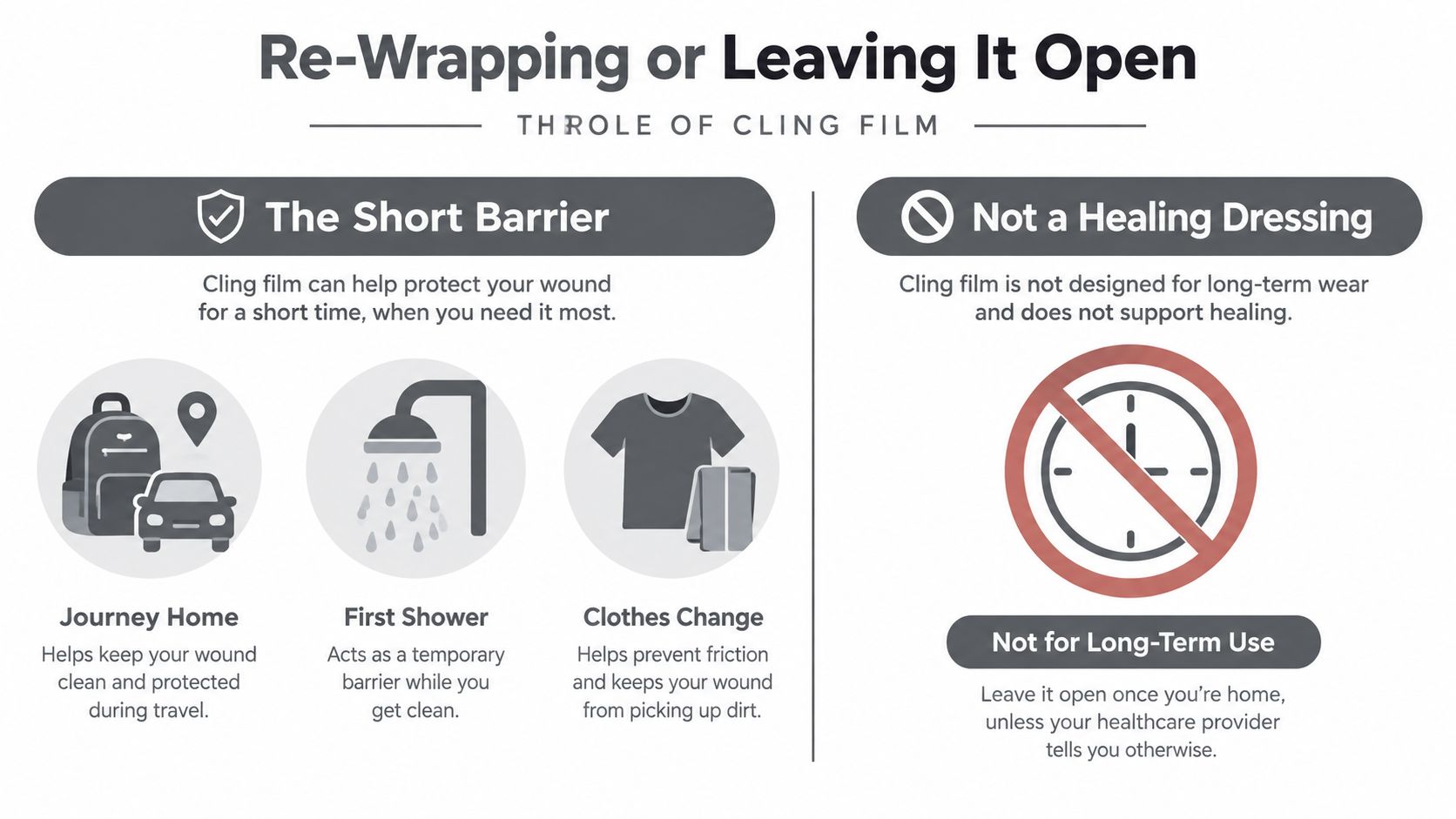
The problem with leaving supermarket film on too long is simple. It traps plasma, ink, and body heat against open skin, which gives you the exact damp, oxygen-poor environment that makes aftercare harder to judge. The wound needs to start drying on the surface within hours, not sit in a little greenhouse under plastic.
There are a few limited exceptions. A sleeve may need brief re-covering if you're putting on a work shirt, a tattoo may need a clean barrier for a dusty commute, or a fresh piece may need short-term protection if your clothing is rough and impossible to avoid. Even then, the film is just a temporary shield, not a substitute for proper cleaning.
Off, washed, dry, and uncovered unless your artist has given you a specific reason to re-cover.
That's the rule I'd give a nervous first-timer standing in front of the mirror. If you've already washed the tattoo and the area can breathe, let it breathe. If you're thinking of re-wrapping because it “feels safer”, that's usually the wrong instinct.
When the Wrap Goes Wrong
Real life is messier than aftercare leaflets admit. The film sticks, a dark sticky pool forms under one side, sweat builds up overnight, or a curious flatmate peels it early because they “thought it looked loose”. None of that means panic. It means you need the right response instead of a dramatic one.
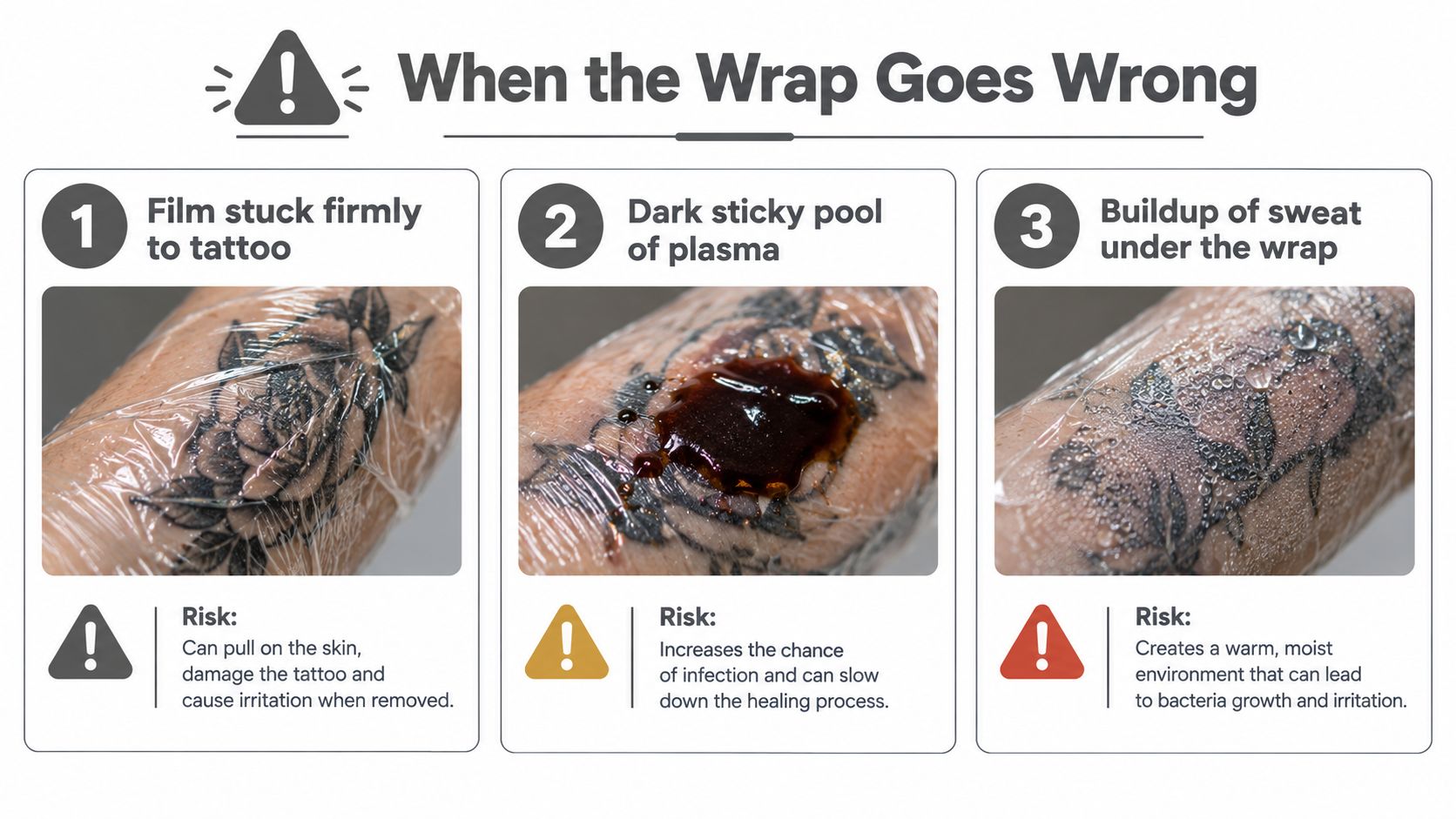
If the film has stuck firmly, soften it with lukewarm water and let the adhesive release. If there's a dark sticky patch of plasma, don't scrape at it. Wash it off gently after removal and move on. If sweat has collected underneath, the issue is heat and occlusion, not mystery damage, so get the wrap off, clean the skin, and stop the area from sitting in more moisture.
The one situation that changes the tone is contamination. If the wrap has lifted, leaked, or been handled by someone else, and the tattoo is now exposed to questionable fabric or dirty hands, redress it with a clean non-stick pad only if your artist has told you to. Otherwise, wash and leave it open.
Warning signs matter more than messy-looking fluid. If redness starts spreading, the skin feels hot rather than just tender, pus appears, pain gets worse after day two, or there's a smell that isn't just old plasma, you stop improvising. Message your artist and, if needed, get to a clinic.
When to stop self-managing
- Spreading redness: not the usual pink halo, but a wider area that grows.
- Heat and swelling: skin that feels hotter or tighter each hour.
- Discharge with smell: especially if it's thick, yellow, or unpleasant.
- Increasing pain after day two: the trend should be calmer, not sharper.
If the wrap has failed because of sweat or water, the solution is usually boring. Clean the tattoo, dry it, and do not slap on a fresh wad of kitchen film and hope for the best.
Looking After the Tattoo After the Wrap
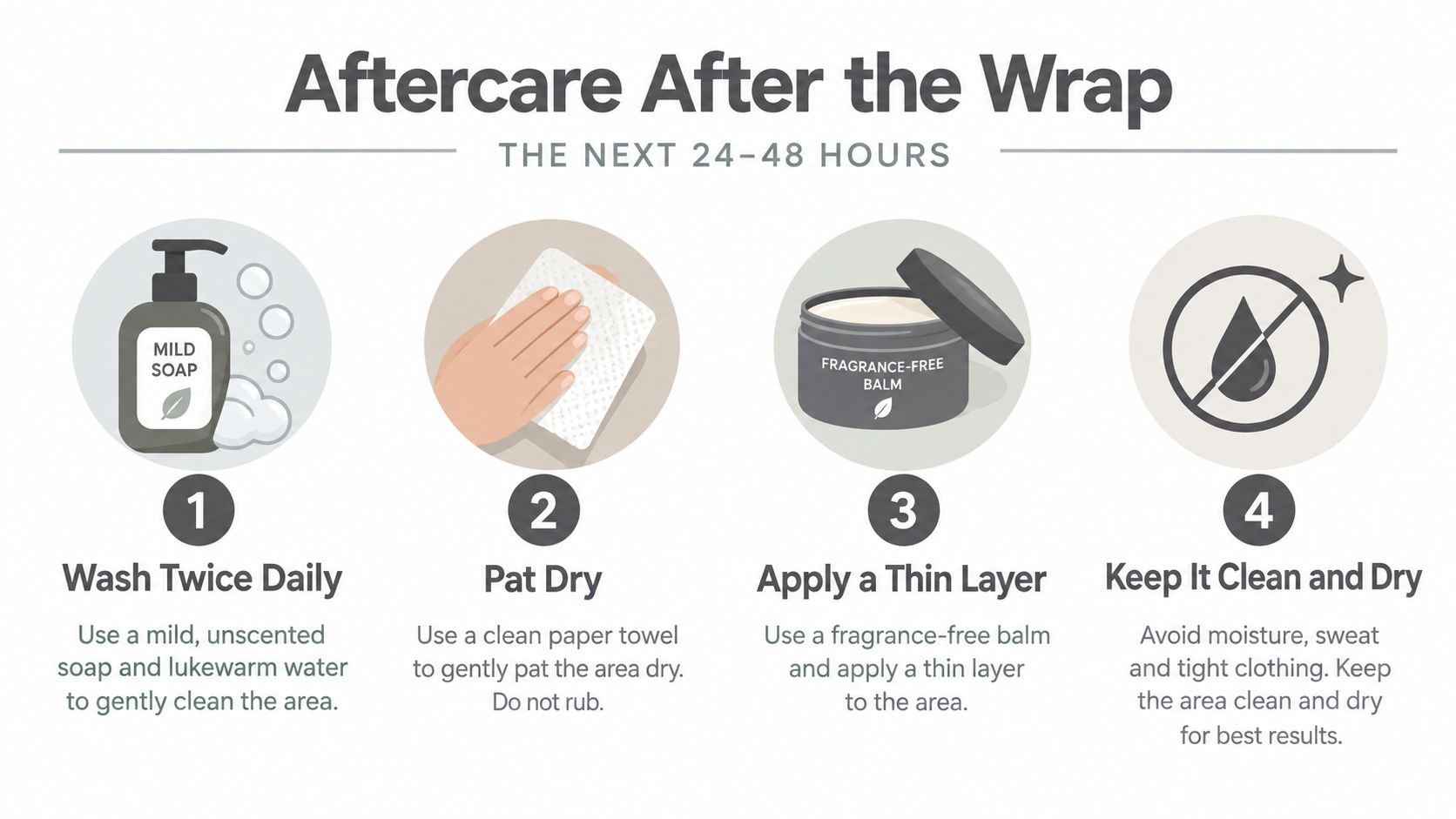
The wrap is off, and now the tattoo starts in earnest. Clean skin wins this stage. Wash it twice daily with mild, unscented soap and clean water, then pat it dry with a fresh paper towel. No scrubbing, no rough towel, no rubbing the area raw.
Use only a thin layer of a breathable aftercare product or a plain fragrance-free moisturiser. Heavy petroleum-style smothering traps too much moisture and leaves the skin sitting wet. That slows the surface down and makes everything feel sticky.
Keep clothes loose, especially over fresh linework on ribs, thighs, or upper arms. Sleep in a position that takes pressure off the tattoo. If your shirt or sheet starts to stick, move the fabric carefully instead of yanking it free. Showers should stay brief and lukewarm, not hot and not long enough to soften the skin.
Exercise, swimming pools, hot tubs, and direct sun are all the wrong move at this stage. Sweat, soaking, and UV interfere with the skin settling. Once the tattoo is fully healed, high-factor SPF matters for protecting the finished work, but that belongs to healed skin, not a fresh wound.
If redness spreads, swelling builds, discharge turns ugly, red streaks appear, fever shows up, or pain gets worse after day two, stop guessing and speak to your GP or your studio. Don't diagnose it through a search feed. If you want a wider look at where the healing process goes from here, this studio healing page is the right place to continue.
Clean, cool, dry, and uncovered.
Book a Session or Ask a Question
If you're still weighing up when to take cling film off tattoo because your piece is large, sweaty, or under clothing tonight, the right answer is usually the one your artist gave for that exact tattoo. That's the whole reason good aftercare is specific, not generic. A small forearm line, a full sleeve, and a back piece do not deserve the same timetable, and neither does a tattoo that leaked heavily on the way home.
The three decisions you've got now are straightforward. First, choose the timing window that matches the size and placement of your piece. Second, if the wrap misbehaved, deal with the problem at the sink instead of picking at it. Third, spend the next 48 hours keeping the tattoo clean, dry, and lightly moisturised, not smothered.
If you want a sanity check from a working studio rather than guessing off a forum post, Timebomb Tattoo & Piercing in Bournemouth and Croydon handles both custom tattooing and body piercing, and artists there can talk through aftercare for the piece you have. That includes advice for fresh tattoos, piercings, and whether a wrap issue needs a quick fix or a proper look.
For urgent day-of wrap questions, call the studio you were tattooed at and describe what the film is doing. If you've got a photo, send it over WhatsApp so the artist can judge whether it's normal plasma, trapped sweat, or something that needs to come off now. For non-urgent queries, email works fine. If you're booking your next piece, use the online form, check the studio Instagram for current work, or walk in during opening hours if you're local and the artist has space.
Timebomb Tattoo & Piercing takes aftercare seriously because the first day matters just as much as the linework. If you want a calm, practical conversation about wrap removal, healing, or your next tattoo or piercing, visit Timebomb Tattoo & Piercing and book with a studio that'll talk you through the job properly.