
You've searched for a tattoo in Croydon, saved a folder of reference images, and now you're stuck between choosing an artist, checking the studio's hygiene, and working out whether your new piece will fit around commuting, work, the gym, or a holiday. Those practical details matter as much as the artwork itself.
A good tattoo experience starts before the needle touches your skin. You need an artist whose specialist style suits the design, a licensed studio with controlled hygiene processes, a realistic booking plan, and aftercare you can follow properly. Croydon has a strong connection with tattoo culture, too. Jessie Marjorie Knight, born in Croydon in 1904, is widely described as the UK's first female tattoo artist and the first publicly recognised professional woman tattooer in the United Kingdom. She began tattooing in 1921, opened her own shop in Aldershot in 1936, and continued to be associated with tattooing into the 1980s, making her birthplace part of the story of British tattooing (UK tattoo-shop data and history).
Table of Contents
- Finding Your New Tattoo Artist in Croydon
- Choosing Your Style and Specialist Artist
- Booking Your Appointment and Consultation
- Hygiene Standards and Local Regulations
- Travel and Getting to the Studio
- Essential Aftercare for Healing and Longevity
- Ready to Start Your Tattoo Journey
Finding Your New Tattoo Artist in Croydon
A first-time client often begins with a simple idea, perhaps a flower, a pet portrait, a meaningful date, or a small symbol. The difficulty comes when that idea has to become a tattoo that works on a particular part of the body, at a practical size, with lines and shading that will remain legible. Searching for a studio near you is useful, but proximity alone shouldn't decide who applies permanent artwork to your skin. A helpful starting point is this guide to tattoo studios near Croydon, followed by a close look at each artist's portfolio.
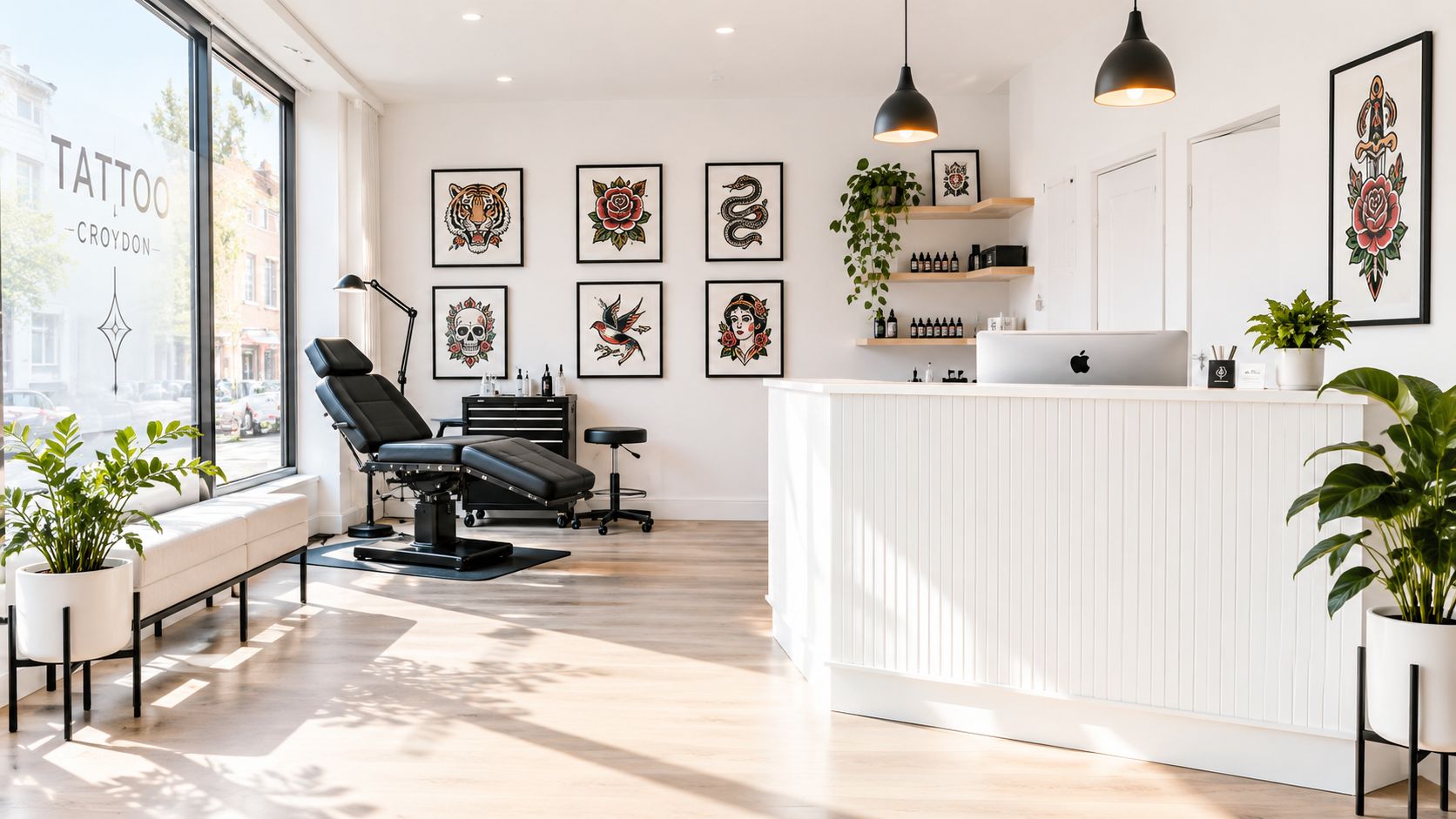
The Croydon studio at 22 George Street, Croydon, CR0 1PA has operated as part of Timebomb Tattoo & Piercing since 2003. Its purpose-designed environment includes private, curtained tattoo spaces and multiple booths, which can make a meaningful difference if you're nervous, discussing a sensitive design, or settling in for a longer appointment. Resident and guest artists also give clients access to different approaches rather than forcing every idea through the same visual filter.
What a useful consultation should reveal
A strong consultation isn't a sales pitch. It should help you understand whether the artist can interpret your idea, where the design will sit, how large it needs to be, and what compromises may be necessary.
Look for an artist who:
- Shows relevant healed or completed work: A portfolio of fine-line flowers doesn't automatically demonstrate skill in Japanese sleeves or realistic portraits.
- Asks about placement and lifestyle: A design on the ribs, hand, forearm, or thigh has different practical considerations, including movement, visibility, and exposure to friction.
- Explains design limits: Tiny details may need simplifying, while a realistic image may need enough surface area for contrast and shading.
- Listens before drawing: A custom tattoo should reflect your brief, not look like a recycled stencil selected because it is quick to apply.
Walk-ins can work for small, straightforward tattoos when an artist has availability. For a larger, detailed, or highly personal piece, a free consultation and appointment provide a clearer route from idea to finished design.
Choosing Your Style and Specialist Artist
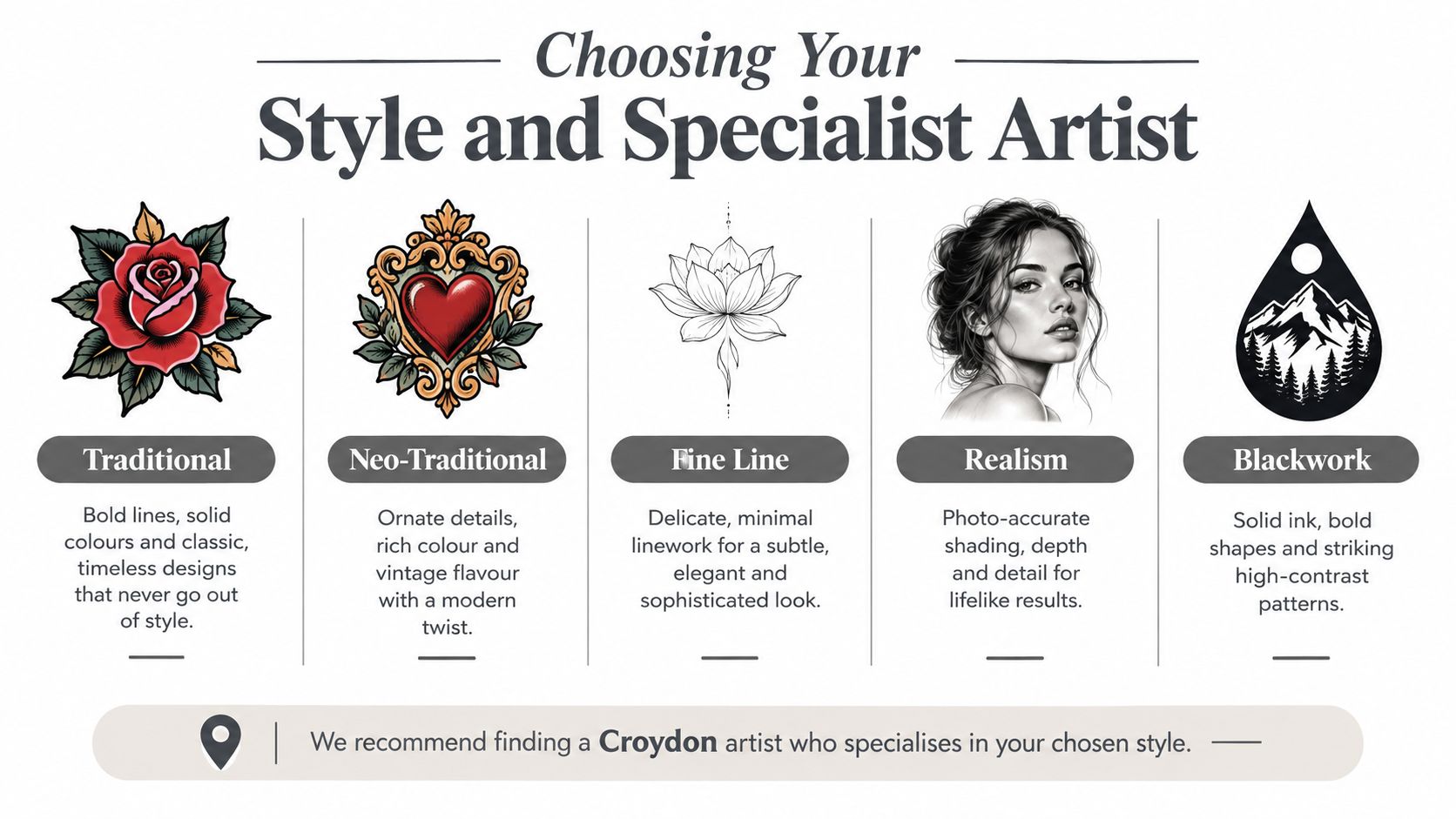
The most reliable way to choose an artist is to start with the visual language of the tattoo, not just the artist who has the earliest appointment. A Traditional design depends on confident outlines, controlled colour, and strong composition. Fine Line work depends on delicacy and restraint. Realism requires convincing tonal transitions, while Blackwork relies on the deliberate use of solid, high-contrast ink.
Those differences affect the consultation. An artist who excels at bold Traditional work may not be the right match for a tiny botanical design, just as a Fine Line specialist may not be the natural choice for a dense Japanese back piece. Review an artist's portfolio for work that resembles your intended style, subject, scale, and placement, rather than choosing from a general gallery.
Match the brief to the technique
Timebomb's Croydon service covers a broad range of custom work, including Traditional, Old School, Neo-Traditional, Black and Grey, Fine Line, Realism, Colour Realism, Portraits, Japanese, Blackwork, Dotwork, New School, and micro or small tattoos. The useful point isn't the length of the list. It's whether the studio can match your particular brief to someone who regularly produces that kind of work. You can use this overview of body art and tattoo services to narrow your search before contacting the studio.
Use reference images to communicate mood, subject, composition, and colour direction, but don't expect an artist to copy another tattoo exactly. Bring several references and explain what attracts you to each one. One image might show the line quality you like, another the colour palette, and a third the way the design wraps around a limb.
Size is a technical decision, not just a budget decision. A design that looks clear on a phone screen may become crowded when reduced to a small area. Fine details, tight lettering, and close shading need room to breathe. Your artist should tell you when enlarging, simplifying, or changing the placement will produce a stronger result.
Where styles involve trade-offs
- Traditional and Old School: Bold outlines and clear shapes tend to create a strong, recognisable result. The trade-off is that the style intentionally favours graphic impact over photographic detail.
- Neo-Traditional: Ornate composition and richer colour can give a design more decorative depth. It usually needs enough space for the detailing to remain readable.
- Fine Line and micro tattoos: These can look subtle and elegant, but their delicate character makes careful sizing, placement, and aftercare particularly important.
- Realism and portraits: Accurate reference material and an artist experienced in faces, animals, or objects are essential. Poorly matched reference images create problems before the appointment begins.
- Japanese, Blackwork, Dotwork, and New School: These styles often depend on rhythm, contrast, flow, or deliberate exaggeration. The artist needs to understand how the design will sit on the body, not just how an isolated image looks.
Booking Your Appointment and Consultation
Booking becomes much easier when you treat it as a design process rather than a quick purchase. The aim of the first contact is to give the studio enough information to identify a suitable artist and tell you what happens next.
A practical booking sequence
-
Send a clear enquiry. Include your idea, preferred placement, approximate size, colour preferences, reference images, and whether the piece is part of a larger project. Mention any relevant deadline, but don't pressure the artist into rushing a design that needs proper planning.
-
Use the free consultation properly. Ask which artist is the best fit, whether the reference material is workable, and whether the proposed size will preserve the detail. This is also the right time to discuss design changes, estimated session planning, deposits, and the studio's preparation requirements.
-
Choose an appointment or ask about a walk-in. Walk-ins may suit a small, simple piece when an artist has space. Appointments are the sensible option for sleeves, portraits, realism, large colour work, or any design that requires preparation and a dedicated schedule.
-
Confirm placement and expectations. Check whether the design will be positioned to face you, other people, or follow the natural line of the body. Ask how the artist approaches revisions and what can realistically be changed before the tattoo begins.
-
Prepare for the day. Eat a normal meal, drink water, wear clothing that gives easy access to the area, and avoid arriving rushed. Bring identification if the studio requests it, and tell the artist about relevant allergies, medications, skin conditions, or previous reactions.
Why consultation beats guesswork
A consultation protects both sides. You get a realistic plan instead of vague reassurance, while the artist gets the information needed to create a design that fits your body and brief. For a personal tattoo, that conversation is more valuable than choosing a studio solely because it offers a same-day slot.
Don't be concerned if the final design isn't handed over as a finished image during the first message. Custom work often develops through discussion. What matters is that the artist explains the process and records the decisions that affect the finished piece.
Hygiene Standards and Local Regulations
Croydon tattoo studios operate within a local regulatory framework, not an informal system based only on appearances. Tattooing is treated as a special treatment under the London Local Authorities Act 1991, and a premises must hold a Croydon Council special treatment licence. The council also states that offering or advertising tattooing without a licence is an offence (Croydon special treatment licensing guidance).
A licence isn't a guarantee that every aspect of a client's experience will be perfect, but it provides an enforceable baseline around hygiene, training, and safety. It gives you a practical reason to ask how the studio controls contamination, handles sharps, cleans surfaces, and manages reusable equipment.
Questions worth asking before you book
- Are needles single-use? Tattoo needles should be opened for the individual client and disposed of safely afterwards.
- How are reusable instruments sterilised? Reusable equipment should be sterilised in a properly maintained autoclave, not merely wiped down.
- Are gloves changed between clients? Gloves must be changed between clients, and hands should be washed before and after skin-piercing work.
- How is the skin prepared? UK infection-prevention guidance includes alcohol-based skin disinfection and suitable cleaning procedures.
- What happens to ink and consumables? Model local byelaws require tattoo inks or dyes to be sterile and inert, with containers disposed of after treatment or cleaned and sterilised before reuse (Parliamentary answer on tattoo ink and dye controls).
- What aftercare will you receive? Clear written or verbal guidance should cover cleaning, water exposure, irritation, and warning signs.
Tattooing breaches the skin barrier, so infection control is central rather than cosmetic. UK guidance identifies risks including hepatitis B, hepatitis C, HIV, and tetanus, which is why single-use sharps, glove changes, handwashing, and validated sterilisation matter (UK infection-control guidance for tattooists and body piercers).
England has no nationally recognised or accredited training route or legal competence requirement for tattooists, according to government guidance (tattooing and body-piercing infection-prevention guidance). That makes the studio's consultation, documentation, cleanliness, equipment controls, and aftercare approach especially important indicators when you compare options.
Travel and Getting to the Studio
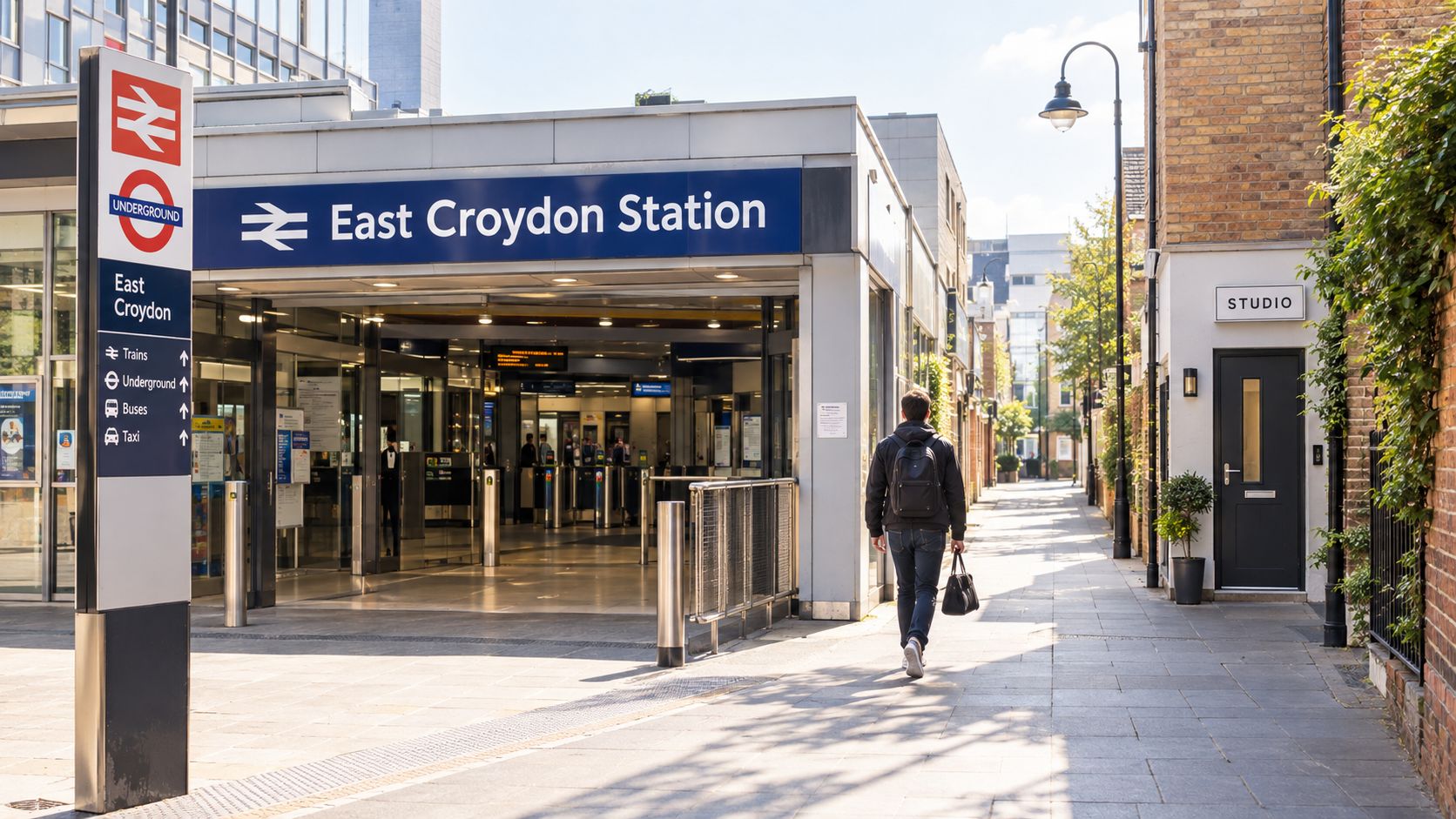
The Croydon studio is at 22 George Street, Croydon, CR0 1PA, in a central location that is a short walk from both East Croydon and West Croydon stations. Check your route before leaving, especially if your appointment is long or you're travelling with someone who will wait nearby.
Arriving by public transport
National Rail services make East Croydon a practical arrival point for clients travelling across South London. West Croydon also provides access to rail and tram connections, while local bus routes serve the town centre. Allow time to walk from the station, find the entrance, and settle in before your appointment rather than arriving breathless and flustered.
Driving and parking
If you're driving, put the full address into your navigation before setting off and check current town-centre restrictions. Parking availability can change, so look for a nearby public car park rather than assuming you'll find a space directly outside the studio. Build in time to walk from the car park and avoid booking a session so tightly that a minor delay affects your preparation.
For a tattoo on the leg, foot, or another area that may feel tender afterwards, consider how you'll get home before you arrive. Public transport may be perfectly manageable for many clients, but a longer journey involving crowded platforms or friction against fresh skin can be uncomfortable. Wear loose, clean clothing and keep the route home as straightforward as possible.
Essential Aftercare for Healing and Longevity
Your artist's aftercare instructions take priority because they know the products and dressing used during your appointment. The basic routine is simple, but consistency matters more than buying a complicated collection of products.
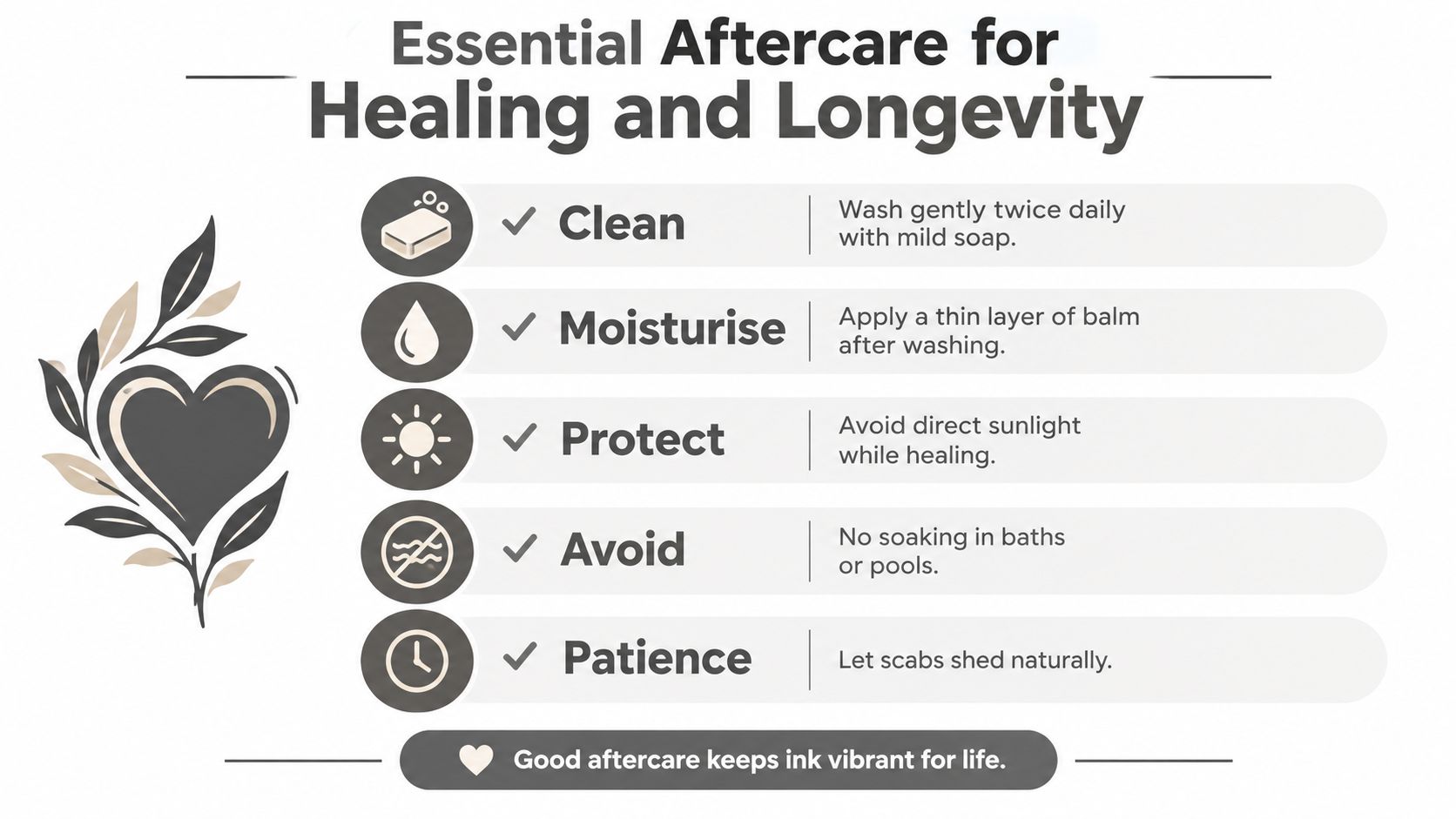
A straightforward routine
- Clean gently: Follow the studio's timing for removing the dressing, then wash with clean hands and a mild product as advised. Don't scrub, pick, or use a rough flannel.
- Moisturise lightly: Once the skin is clean and dry, apply a thin layer of the recommended balm or moisturiser. Heavy application can leave the area overly damp and uncomfortable.
- Protect the surface: Keep the tattoo away from direct sunlight while it heals and choose loose clothing that won't rub against it.
- Avoid soaking: Don't swim, use a hot tub, or soak the tattoo in a bath during healing. Showering is generally easier to control than prolonged immersion.
- Let the skin settle: Flaking and scabbing can occur as the tattoo heals. Don't pull at loose skin, as interference can irritate the area and affect the final appearance.
NHS guidance warns against soaking, swimming, and touching a healing tattoo unnecessarily. It also advises seeking prompt medical advice if you develop infection signs such as spreading redness, warmth, swelling, or fever (NHS tattoo and piercing health advice).
Travel, work, and exercise need practical judgement. A desk job may be easier than a physically demanding shift, while gym equipment, tight clothing, sweat, and contact with shared surfaces can create avoidable irritation. If you're planning around a commute, swim, or training routine, ask the artist how to protect the placement and follow the aftercare advice given for your specific piece. For a broader explanation of how long a tattoo takes to heal, plan for the skin to need care beyond the day of your appointment.
Ready to Start Your Tattoo Journey
Choosing a tattoo in Croydon should come down to more than a convenient address or an attractive social-media image. The strongest decision combines artist specialism, suitable scale, clear consultation, licensed premises, controlled hygiene, realistic travel planning, and disciplined aftercare.
Croydon's local rules give clients a useful starting point. Check that the premises is licensed, ask direct questions about single-use needles and sterilisation, and pay attention to whether the answers are specific. A professional studio should be able to explain its process without making you feel awkward for asking about safety.
Your design also deserves a proper match. Traditional, Neo-Traditional, Fine Line, Realism, Japanese, Blackwork, Portraits, and Colour Realism each place different demands on the artist. A portfolio should show the type of work you want, not merely prove that the artist can tattoo in general.
Make the first contact useful
Send your idea with:
- The subject and meaning: Explain what the tattoo represents and which elements matter most.
- Reference images: Share examples of composition, line quality, colour, or mood, while leaving room for an original interpretation.
- Placement and approximate size: A rough measurement helps the studio assess detail and session planning.
- Your availability: Say whether you need an appointment for a larger project or are asking about a small walk-in piece.
- Questions about aftercare and preparation: Getting these answers early makes the appointment day calmer.
The studio offers custom tattooing, professional body piercing, free consultations, private tattoo spaces, resident and guest artists, and walk-in availability when artists have room. Its Croydon location is designed to serve both first-time clients who need guidance and experienced collectors who already know the style they want.
If you're unsure, start with a consultation rather than committing to a design that doesn't feel settled. A clear conversation can turn a loose idea into a practical plan, identify the right specialist, and help you arrive prepared for a safer, more considered tattoo experience.
Timebomb Tattoo & Piercing offers custom tattooing, professional piercing, free consultations, and access to artists working across a wide range of styles in its Croydon studio. Share your idea by phone, email, online enquiry, or by visiting Timebomb Tattoo & Piercing, and take the first step towards booking your tattoo or piercing.